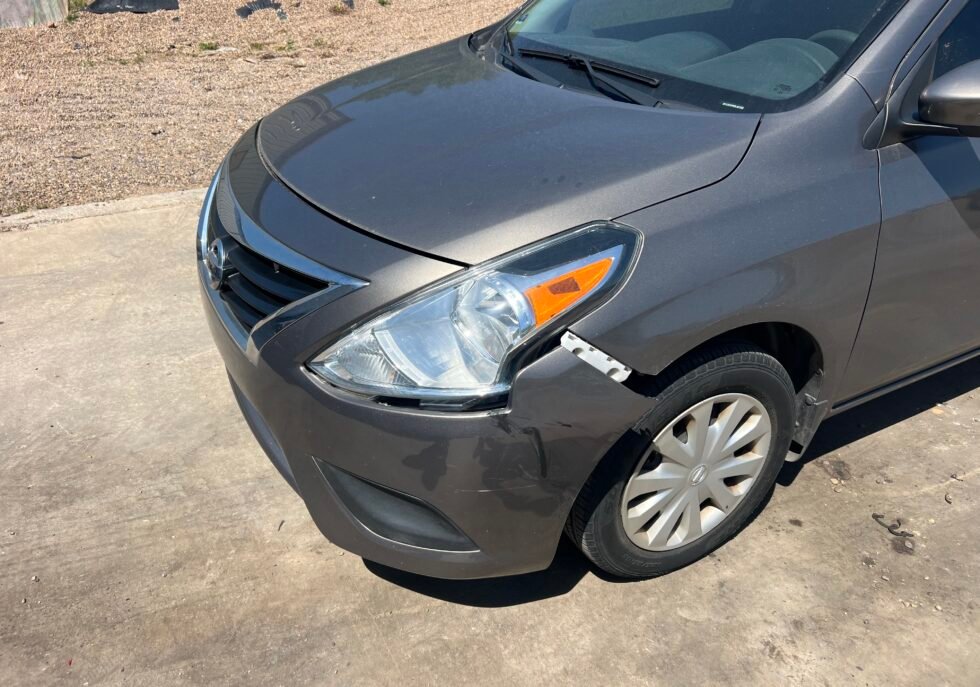
The sound of crunching plastic is unmistakable. It turns a routine morning commute on I-235 into an immediate headache. You step out, inspect the bumper, and feel a wave of relief because the damage looks like a simple scuff. But on modern vehicles, “looks” are dangerous.
That plastic cover often rebounds while the crash sensors and steel frame rails behind it remain crushed. This article breaks down why the term “fender bender” is misleading, exposing the hidden structural risks, the high cost of recalibrating safety tech, and why filing an insurance claim might actually cost you more than paying cash.
Main Takeaways
- While usually defined as a collision under 20 MPH, these low-speed impacts account for the majority of rear-end accidents on our roads.
- Plastic bumpers have “memory” and snap back, hiding structural damage. The average repair bill for property damage is now nearly $6,000.
- Advanced Driver Assistance Systems (ADAS) live in your bumper. A slight nudge can disable your car’s safety features, requiring expensive recalibration.
- In Oklahoma’s at-fault system, a minor claim can spike your premiums by 40%, often making out-of-pocket payment the smarter financial play.
- You have the absolute legal right to choose your repair shop in Oklahoma. You do not have to use the facility that your insurer pushes on you.
What Is a Fender Bender?
“Fender bender” is the casual term drivers use for low-speed collisions, typically occurring at under 20 MPH. The name implies damage limited to the fender, the metal panel over the wheel, but the reality is usually messier. These incidents almost always compromise the alignment of the bumper assembly, grille, headlights, and trunk.
In Oklahoma City, these are daily frustrations, frequently happening in the stop-and-go gridlock of the Broadway Extension or the tight turns of the Penn Square Mall parking garage.
The numbers confirm that these aren’t rare anomalies. The National Highway Traffic Safety Administration (NHTSA) identifies rear-end collisions as the most frequent type of crash, making up about 29 percent of all U.S. traffic accidents. Most “fender benders” fit this profile exactly.
The National Safety Council (NSC) adds that tens of thousands of these occur in parking structures every year. While the speed is low, the volume is massive, making this the specific accident type you are most likely to encounter.

A Fender Bender Is More Than a Scratch
Do not trust your eyes after a low-speed hit. Modern cars are built with unibody construction and crumple zones specifically engineered to sacrifice themselves to save you. The plastic bumper cover is highly elastic; it can absorb a 5 MPH hit and spring back to its original shape instantly. To the naked eye, the car looks fine. Underneath, the structure is often broken.
Behind that plastic facade lies the bumper absorber, a foam or honeycomb block meant to crush on impact, and the steel reinforcement bar. If these are damaged, they lose their ability to protect you in a second crash.
Furthermore, the force often travels down the frame rails. Even a millimeter of shift in the frame can destroy your suspension geometry, causing the car to “crab walk” or chew through tires. The Insurance Information Institute reports that the average property damage liability claim hit $5,893 in 2023. That price tag proves these aren’t just scratches; they are structural repairs.
Visible vs. Hidden Damage Potential
| Component | Visible Signs | Potential Hidden Damage |
| Bumper | Scratches, dents, cracks | Crushed absorber, bent reinforcement bar |
| Trunk/Hood | Difficulty closing, gaps | Misaligned latches, bent hinges, and unibody sway |
| Wheels | Scuffed rims | Bent control arms, suspension misalignment |
| Lights | Cracked lens | Broken mounting tabs, severed wiring harnesses |
Why ADAS Sensor Calibration is Critical
Ten years ago, fixing a bumper meant heat, filler, and paint. Today, it means computer science. Your bumper is no longer just a shield; it is a housing unit for Advanced Driver Assistance Systems (ADAS). If your car has blind-spot monitoring, parking assist, or adaptive cruise control, those delicate sensors sit right in the impact zone.
A minor tap can knock a radar unit off its axis by a fraction of a degree. That tiny shift translates to a massive error range of 100 feet down the road. The system might slam on the brakes for a phantom obstacle or fail to stop for a real one.
The American Automobile Association (AAA) found that ADAS requirements can add up to $1,300 to a repair bill. This isn’t for parts; it’s for the labor and specialized targets needed to recalibrate the car’s brain. If you take your car to a general mechanic instead of a specialized OKC body shop like Syed Brothers, you risk driving a car with disabled safety systems.

Critical Steps to Take Immediately Following an OKC Traffic Incident
Adrenaline spikes after a crash, clouding your judgment. Following a strict protocol protects your wallet and your legal standing.
- Secure the Scene: Check everyone for injuries. If anyone complains of pain, call 911 instantly.
- Clear the Road: If the car moves, get it off the main lanes. Blocking traffic on busy OKC arteries creates a secondary hazard.
- Involve Law Enforcement: Call the police. You need an official report. Insurance companies treat a police report as the gold standard of evidence.
- Exchange Data: Get the other driver’s license, insurance card, and phone number. Do not rely on them texting it to you later.
- Gather Evidence: Take photos of everything. Photograph the damage, the position of the cars, skid marks, and the license plates.
- Limit Communication: Be polite, but keep it brief. Do not apologize. Do not say, “I didn’t see you.” Anything you say can be used to deny your claim later.
Insurance Claims and the Financial Reality of Minor Crashes
Filing a claim feels like the logical next step, but it is often a financial trap. You have to weigh the repair cost against your deductible and the inevitable premium hike. Data from NerdWallet and Insurance.com indicates that a single at-fault claim for property damage can drive your rates up by 25 to 40 percent. Oklahoma is an at-fault state. The person who caused the wreck pays.
But consider this: If you are at fault, the repair is $900, and your deductible is $500, the insurance company cuts a check for $400. In exchange, they mark your file as “high risk,” potentially costing you thousands in increased premiums over the next three years. In many minor cases, keeping the insurance company out of it and paying cash is the superior strategy.
The Long-Term Impact of Diminished Value on Your Vehicle
Even if the repair is flawless, your car is now worth less than it was yesterday. A vehicle with a clean history always commands a higher price than one with an accident on its Carfax report. This loss in equity is called “diminished value.”
In Oklahoma, if the accident was not your fault, you can file a diminished value claim against the other driver’s insurance. This pays you for the market value your car lost the moment it was hit.
To win this, you need proof. Shops like Syed Brothers provide the detailed repair documentation necessary to substantiate these claims, proving to adjusters that while the car is fixed, the asset value has shifted.
Choosing the Right OKC Auto Body Shop for Professional Restoration
Insurers will try to steer you toward their “preferred” shops. These are facilities that have agreed to cut costs and speed up turnaround times to save the insurance company money. You are under no obligation to use them. Oklahoma law guarantees your right to choose your repair facility.
Prioritize shops that hold I-CAR Gold Class or ASE (Automotive Service Excellence) certifications. These badges prove the technicians have studied the metallurgy and electronics of modern cars.
Syed Brothers Auto Body Shop OKC adheres to these rigorous standards, utilizing manufacturer-spec procedures for aluminum welding, frame straightening, and computerized color matching.
Comparing Repair Methods: Paintless Dent Repair vs. Traditional Restoration
You don’t always need to sand and paint. Distinguishing between Paintless Dent Repair (PDR) and traditional bodywork can save you days in the shop.
Technicians use metal rods to push the dent out from the inside of the panel. This keeps your original factory paint intact. It is the ideal fix for door dings or hail damage where the paint surface isn’t broken. It is fast, usually costing between $75 and $250 per panel, and keeps the repair off the Carfax in many cases.
Traditional Restoration
If the paint is chipped, the metal is stretched, or the impact is on a body line, PDR won’t work. This process involves grinding the paint off, using body filler to recreate the surface, priming, and repainting. It is labor-intensive but necessary for the deeper creases and scuffs typical of a fender bender.
A fender bender is rarely just a cosmetic inconvenience. From the structural integrity of your unibody to the delicate calibration of ADAS sensors, the implications of a low-speed impact run deep.
Ignoring these issues can compromise your safety and degrade your vehicle’s value. When you need repairs that go beyond the surface, you need a partner who understands the complexities of modern collision repair.
Syed Brothers Auto Body Shop OKC, offers the expertise required to bring your vehicle back to pre-accident condition. Whether you need precision paint restoration, aluminum welding, or specialized dent repair, our certified technicians ensure every sensor is calibrated, and every panel is aligned perfectly.
Don’t let a minor accident become a major headache. Contact Syed Brothers today for a comprehensive estimate and restore your vehicle with confidence.
Frequently Asked Questions
What Is The Legal Definition Of A Fender Bender?
Legally, "fender bender" does not exist as a statutory term; it is conversational shorthand for a minor collision.
The National Highway Traffic Safety Administration (NHTSA) and local law enforcement categorize crashes based on "Property Damage Only" (PDO) versus "Injury."
According to NHTSA crash data protocols, the severity is determined by the monetary value of damage and injury presence, not the colloquial name.
Do not let the term "fender bender" lull you into a false sense of security. In a legal dispute, the specific vehicle code violation (e.g., "Failure to Control Speed") matters more than the nickname of the accident.
Is A Fender Bender Considered A Real Car Accident For Insurance Purposes?
Yes, insurers treat it exactly the same as a major crash regarding liability.
An accident is an accident. If a claim is filed, it goes on your CLUE (Comprehensive Loss Underwriting Exchange) report.
The Insurance Information Institute confirms that claim frequency is a major factor in rate setting. Even a payout of $200 counts as a "loss event."
Treat every impact as a formal accident. Assess the damage value carefully before notifying your insurer, as the "incident count" on your record can damage your insurability.
Do I Have To Call The Police For A Minor Parking Lot Bump In OKC?
You are legally required to report accidents exceeding a specific damage threshold.
Oklahoma statutes mandate an accident report if there is injury, death, or property damage exceeding $500.
Given that the Insurance Information Institute sets the average property damage claim at nearly $6,000, virtually every fender bender meets this $500 requirement.
Always call the police. Without a police report, it is your word against the other driver’s, which often leads to split liability (50/50 fault) decisions by insurance adjusters.
How Much Does It Usually Cost To Fix A Bumper After A Fender Bender?
Costs have skyrocketed due to integrated technology. A simple plastic cover swap might cost $500 – $900, but sensors change the equation entirely.
AAA research demonstrates that ADAS sensor calibration alone adds $300 to $1,000+ to the bill, pushing total repair costs for minor hits above $1,500 regularly.
Get a professional estimate before offering to pay cash to the other driver. What looks like a $200 scratch could be a $2,000 sensor alignment job.
Will A Fender Bender Show Up On My Vehicle's Carfax Report?
It depends on who reports the incident. Carfax and AutoCheck scrape data from police departments and insurance databases.
If you file a police report or an insurance claim, the data is almost guaranteed to appear. If you pay a private shop cash without involving the police or insurance, it is less likely to show up.
A "dirty" Carfax lowers resale value. If the damage is truly minor and cosmetic, paying out-of-pocket can protect your vehicle's future trade-in value.
Can A Low-Speed Impact Cause The Airbags To Deploy?
It is rare, but it happens if the impact hits the sensor's "sweet spot."
Airbags typically deploy at impacts equivalent to hitting a solid wall at 8 – 14 MPH. NHTSA guidelines state that deployment depends on the rate of deceleration. Hitting a rigid pole in a parking garage at 10 MPH can trigger them.
If airbags deploy, the car is often a total loss (totaled) because replacing the dash, bags, and pretensioners often exceeds the vehicle's cash value.
How Do I Know If My Car Has Hidden Frame Damage After A Minor Hit?
You cannot tell by looking; you need measurement tools.
Unibody frames distribute energy. A hit on the rear right corner can buckle the roof or the front left door frame.
Industry standard repair protocols require computerized laser measuring systems to detect deviations as small as 1 - 2 millimeters.
If your trunk is hard to close or your steering wheel is off-center, you likely have frame damage. Take it to a shop like Syed Brothers immediately.
Does Insurance Cover ADAS Sensor Recalibration?
Yes, if it is part of a covered repair.
Insurers must pay to restore the vehicle to pre-accident condition, which includes safety systems.
Major insurer guidelines and I-CAR repair standards classify calibration as a mandatory step, not an optional add-on.
Verify your estimate includes "Pre- and Post-Repair Scans." If the shop doesn't list this, they aren't fixing your car correctly, and the insurance won't pay for it later.
Should I Pay For Repairs Out Of Pocket Or File An Insurance Claim?
Do the math on your long-term premium costs. Filing a claim saves you money today but costs you monthly for years.
According to NerdWallet, an at-fault accident can raise rates by an average of $600+ per year for 3 - 5 years.
If the repair is less than $1,500 over your deductible, pay it yourself. You will save money in the long run by keeping your claims history clean.
How Long Does A Typical Fender Bender Repair Take At An OKC Body Shop?
Timelines are driven by parts, not just labor. Physical labor might only take 3 days, but parts delivery can take weeks.
Supply chain disruptions continue to affect auto parts availability, with specific trim pieces or sensors often on backorder.
Ask the shop to verify parts availability before you drop the car off, so you aren't paying for a rental car while your vehicle sits untouched waiting for a bracket.
What Is A Diminished Value Claim And Do I Qualify?
It is a claim for the lost market value of your car. A wrecked and repaired car is worth less than a virgin car. You are owed that difference.
In Oklahoma, you can file a third-party claim against the at-fault driver's insurance for this loss.
You need a certified appraisal to prove the loss. Insurance adjusters will deny this initially; you must be persistent and provide data to get paid.
Can I Choose Any Auto Body Shop I Want For My Insurance Repair?
Yes, this is a protected consumer right. Anti-steering laws prevent insurers from forcing you to use their discount network.
Oklahoma statutes explicitly prohibit insurance companies from requiring a specific repair facility as a condition of payment.
Choose a shop that works for you, not the insurer. "Preferred" shops often have contracts that cap labor rates, which can incentivize rushing the job.
What Information Should I Never Share With The Other Driver After A Crash?
Protect your personal identity and your liability. Exchange only what is legally required.
Identity theft and insurance fraud are risks. Providing a Social Security Number or discussing policy limits (e.g., "I have great coverage") gives the other party leverage.
Silence is golden. Exchange names and insurance numbers, then stop talking. Never admit fault or apologize at the scene.
How Does Oklahoma's At-Fault Law Affect My Fender Bender Claim?
Oklahoma uses "Modified Comparative Negligence." You can only get paid if you are less than 51% responsible.
Under Oklahoma law, if a jury or adjuster finds you 51% at fault, you get $0. If you are 20% at fault, your payout is reduced by 20%.
This is why evidence collection is vital. If the other driver claims you stopped abruptly, you could be assigned partial fault, reducing your payout significantly.