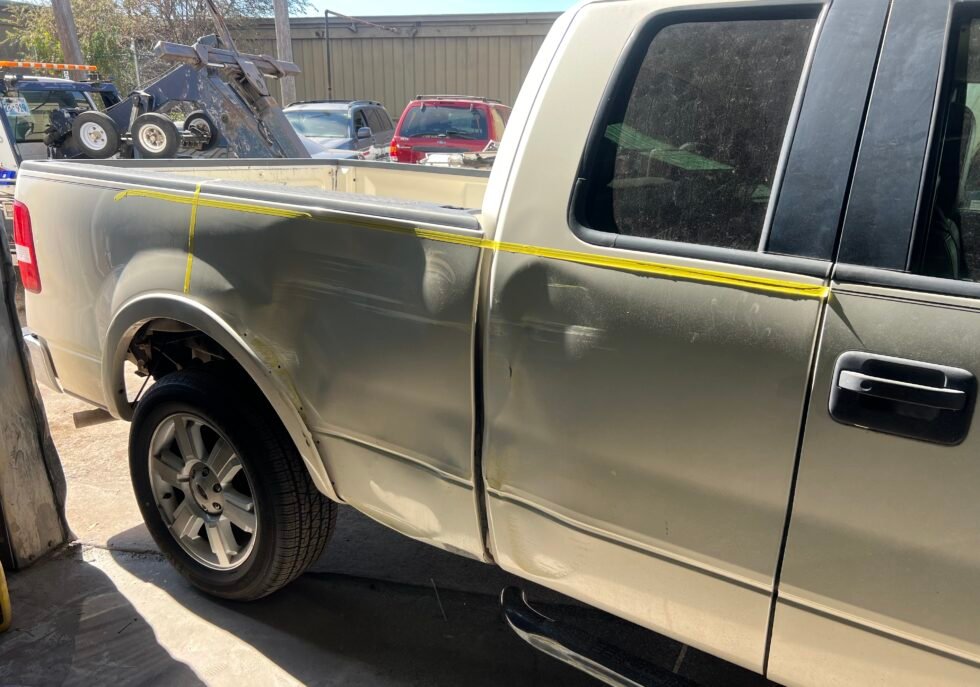
Your vehicle’s factory finish is more than just a color, it is a hardened, baked-on financial asset that no body shop can perfectly replicate once broken. When an Oklahoma supercell turns your hood into a dimpled mess, or a careless driver leaves a mark on your door, the standard reaction is to dread a weeks-long repair involving sanding and repainting.
Paintless Dent Repair (PDR) offers a different path. By applying precise leverage and metallurgical science, technicians reverse the damage without disturbing the original chemical bond of your paint. This guide explains the mechanics behind the process and why it remains the smartest way to protect your investment in Oklahoma City.
Key Notes
- Keeping the original paint intact can secure a resale value 10 to 20 percent higher than repainted vehicles.
- PDR services typically run 60 to 70 percent cheaper than body shop repairs that require fillers and painting.
- Technicians finish most minor repairs in hours, and extensive hail damage takes days, not weeks.
- The method utilizes “metal memory,” coaxing steel or aluminum panels back to their stamped factory tension.
- The process emits zero Volatile Organic Compounds (VOCs) and generates no hazardous chemical waste.
Saving Your Resale Value through Original Factory Finish Preservation
Keeping the Original Factory Finish (OFF) intact is the most reliable strategy for maintaining a vehicle’s worth. Once a panel is sanded and repainted, the factory seal is broken, often leading to color mismatches or peeling years later.
Market data from Kelley Blue Book and NADA Guides indicates that vehicles retaining their original paint command a trade-in value 10 to 20 percent higher than those with aftermarket paint work. Buyers and inspectors can easily spot non-factory paint by looking for tape lines or inconsistent “orange peel” texture. At Syed Brothers Auto Body Shop OKC, we focus on PDR because it essentially erases the damage history of the car. If we don’t paint it, you don’t lose that factory-grade durability or the associated financial equity.
PDR Process Through Metal Memory Science
Paintless Dent Repair is a technical craft that removes hail damage and dings without invasive bodywork. It works because automotive metal possesses a physical characteristic called metal memory.
During manufacturing, sheet metal is stamped into shape under massive tonnage, creating a “memory” of that form. When a hailstone or door hits the panel, it creates stress, locking the metal into a new, dented position. However, the metal naturally wants to return to its original stamped shape. PDR technicians do not force the metal, they relieve the stress holding the dent in place. By applying precise pressure, we allow the panel to snap back to its factory state, preserving the structural integrity that grinding and filling destroys.
Step One: Damage Assessment and Topography Mapping
You cannot repair what you cannot measure. The restoration starts with a technician analyzing the dent’s severity using a specialized PDR reflection board or fog light.
- Light Board Setup: A technician positions a board that casts parallel lines or a fog pattern across the damaged panel.
- Reading the Lines: The reflection distorts where the metal is bent. Pinched lines indicate a high spot, widened lines indicate a low spot. Carefully assessing the condition of the metal is one of the essential steps required in repairing small rust spots on a car.
- Identifying Stress Points: This visual aid highlights the “crown” or stress point holding the dent in, which is invisible in standard daylight.
This optical feedback loop allows for sub-millimeter precision. The technician reads the light to determine exactly where to apply the tool tip to reverse the topography of the damage.
Step Two: Gaining Strategic Access to the Backside of Vehicle Panels
To massage a dent out, the technician needs to get behind it. This step involves creating a pathway to the underside of the panel without causing collateral damage to the vehicle’s interior.
Common access points include:
- Window Openings: We insert a protective wedge and guard into the window well to reach door dents.
- Interior Panels: Technicians may lower headliners or remove door cards to access the roof and quarter panels.
- Factory Holes: We utilize existing wiring conduits or drainage holes to avoid drilling new access points.
In roughly 10 to 15 percent of scenarios, such as roof rails or sealed pillars, backside access is impossible. Here, technicians use “glue pulling.” This involves attaching a plastic tab to the dent’s exterior with specialized adhesive and lifting the metal from the outside.

Step Three: The Art of Slow Precision Pushes and Gradual Manipulation
With access secured, the restoration begins. The technician inserts a high-strength metal rod and begins applying pressure to the backside of the dent. This is a game of millimeters, not force.
The process involves hundreds of micro-pushes rather than one heavy shove. The technician eyes the light board constantly. As the tool tip massages the metal, the distorted lines in the reflection begin to flow parallel again. This action leverages the metal’s memory, slowly walking the damage out until the surface is flush. Doing this too fast cracks the paint, doing it correctly leaves no trace.
Step Four: Tapping Down High Spots to Eliminate Surface Tension
Pushing from the bottom often displaces metal slightly upward, creating a microscopic ridge or “high spot.” To flatten the panel completely, the technician works from the top side.
Using a “knockdown”, a tool made of nylon or polished composite, and a specialized hammer, the technician gently taps the high spots back down. This establishes a rhythm of pushing and tapping. We push the low, tap the high, and neutralize the surface tension until the light board shows a perfectly flat reflection.
PDR vs Traditional Auto Body Repair Cost and Time Comparisons
For OKC drivers, the decision often relies on the bottom line. PDR offers distinct advantages over traditional body shops regarding speed and expense.
Cost and Time Comparison Table
|
Feature |
Paintless Dent Repair (PDR) |
Traditional Body Shop Repair |
|
Average Cost |
$75 – $250 per dent |
$400 – $600 minimum (Labor + Materials) |
|
Repair Time (Minor) |
1 – 3 Hours |
3 – 5 Days |
|
Repair Time (Hail) |
1 – 3 Days |
2 – 4 Weeks |
|
Material Cost |
None (Labor only) |
Paint, Primer, Clear Coat, Filler |
|
Value Impact |
Retains factory value |
Diminished value (CarFax report) |
PDR costs 60 to 70 percent less than conventional repairs for qualifying damage. Traditional shops charge for sanding, Bondo, primer, base coat, and clear coat, materials that PDR does not use. Furthermore, because there is no paint curing time, we can return a hail-damaged car in days, whereas traditional shops may keep it for weeks.
Specialized Equipment Used in Professional Paintless Restoration
The PDR industry grows by 4 to 5 percent annually, driving innovation in tooling. A professional setup can exceed 5,000 dollars, consisting of instruments engineered for specific leverage ratios.
Essential PDR Tools:
- PDR Rods: Constructed from heat-treated stainless steel or carbon fiber to apply torque without flexing.
- Glue Pulling Kits: Utilize distinct glue formulas and plastic tabs to lift dents from the painted side. We use 99 percent alcohol to release the bond safely.
- LED Reflection Boards: High-contrast lighting systems that allow technicians to see the texture of the clear coat.
- Slide Hammers & Mini-Lifters: Precision devices that pull the glue tabs upward with controlled force.
PDR is magic for many dents, but physics dictates its limits. Understanding what we can and cannot fix helps set realistic expectations.
- Round Dents: Impacts from hail, golf balls, or smooth objects.
- Hail Damage: PDR remains the industry standard for 80 percent of hail claims.
- Door Dings: Parking lot impacts where another door strikes yours without scratching the paint.
- Broken Paint: If the clear coat is cracked or deep scratches exist, the panel requires repainting to prevent corrosion.
- Stretched Metal: Sharp, deep creases that have stretched the metal past its elastic limit will result in “oil canning” (wobbling) if PDR is attempted.
- Previous Repairs: We cannot manipulate panels that have previously been filled with Bondo, as the filler will crack.
Environmental Benefits of Chemical-Free Auto Body Restoration
Sustainability matters. PDR is the only method of collision repair that is genuinely green. Traditional shops rely on solvents, reducers, and paints that release harmful Volatile Organic Compounds (VOCs) into the air.
A 2023 analysis of body shop impacts confirms that PDR produces zero toxic waste. We do not use paint booths that consume massive amounts of electricity, nor do we dispose of hazardous thinners. For OKC residents who value eco-friendly choices, PDR restores your car without expanding your carbon footprint.
Managing OKC Hail Damage Insurance Claims with PDR
Hail is a fact of life in Oklahoma City. Fortunately, insurance providers heavily favor PDR for these claims because it saves them money and keeps policyholders happier with faster turnaround times.
When Syed Brothers Auto Body Shop OKC handles a claim via PDR, it typically does not appear on a CarFax report as a “severe accident.” Since the structural safety of the car is never compromised, the repair is classified as cosmetic. This distinction is critical when you eventually sell or trade the vehicle, ensuring you aren’t penalized for weather damage that was perfectly repaired.
Oklahoma weather is unpredictable, but the quality of your repair shouldn’t be. Syed Brothers Auto Body Shop OKC provides the expertise needed to erase hail damage and door dings while protecting your factory finish. Don’t settle for mismatched paint or weeks without your car. If a dent requires repainting instead of PDR, understanding the cost of dent repair with paint can help you make an informed repair decision. Choose the method that saves you time, money, and resale value. Contact us today to schedule your free PDR assessment.
Frequently Asked Questions
What Is The Primary Difference Between PDR And Traditional Dent Repair?
Paintless Dent Repair (PDR) restores a vehicle's metal to its original shape using leverage and specialized tools without disturbing the factory paint, whereas traditional repair involves grinding, filling with body filler (Bondo), and repainting the panel.
The Society of Collision Repair Specialists (SCRS) notes that PDR is non-invasive, preserving the Original Factory Finish (OFF), which is generally harder and more durable than any aftermarket repaint. Because PDR avoids sanding and painting, it retains the vehicle's resale value better than traditional methods, which can signal to future buyers that the car was in a collision.
How Long Does A Typical Paintless Dent Repair Take At An OKC Shop?
For minor cosmetic issues like door dings or shopping cart creases, technicians often complete repairs in one to three hours, allowing for same-day service. In contrast, comprehensive hail damage repair usually takes one to three days, which is significantly faster than the two to four weeks typical of traditional body shops waiting on paint curing and parts delivery.
This speed is possible because PDR eliminates the drying times associated with primers, base coats, and clear coats, allowing you to get back on the road almost immediately.
Will Paintless Dent Repair Damage My Car’s Paint?
No, when performed by a certified technician, PDR is completely safe for your vehicle's paint. Modern automotive paints are formulated with elastic polymers that allow them to flex with the metal, a property documented by paint manufacturers like Axalta and PPG.
Skilled technicians use tools with polished, smooth tips to massage the metal from behind, ensuring no scratches occur on the underside or the visible surface. However, if the paint is already cracked or compromised before the repair, a technician will advise against PDR as the pressure could worsen the existing defect.
Can PDR Fix Dents On The Body Lines Of A Vehicle?
Yes, experienced technicians can successfully repair dents located on body lines, though these repairs require a higher level of skill and precision. The "body line" is the stiffest part of the panel, meaning the metal is under high tension, restoring it requires manipulating that tension back to the factory crease without over-stretching it.
While doable, repairing a dent on a body line may cost slightly more than a flat-surface dent due to the increased difficulty and time required to reconstruct the sharp definition of the line.
Is Paintless Dent Repair Covered By Insurance For Hail Damage?
Yes, PDR is the preferred repair method for insurance companies regarding hail damage. Major insurers like State Farm and Geico prioritize PDR because it is more cost-effective than panel replacement and reduces the likelihood of "diminished value" claims from policyholders.
Most comprehensive insurance policies cover hail damage fully, meaning you are only responsible for your deductible, while the shop handles the supplemental paperwork directly with the adjuster to ensure every dent is accounted for.
Why Is The Original Factory Paint So Important For My Car’s Value?
Original factory paint is applied in a clinically sterile environment and baked at temperatures exceeding 400 degrees Fahrenheit, creating a bond that aftermarket shops cannot legally or physically replicate.
According to Kelley Blue Book, vehicles with their original paint retain 10-20% more value at trade-in because it proves the vehicle has not required major structural repairs. Preserving this finish is the single best way to protect your financial investment in the vehicle, as repainted panels often fade or peel at different rates than the rest of the car.
Can A Dent Be Too Big For Paintless Dent Repair?
The limitation of PDR is usually determined by the depth and stretch of the metal rather than the sheer diameter of the dent. A large, shallow dent the size of a basketball can often be repaired perfectly, whereas a small, sharp dent that has stretched the metal deeply may be unfixable without leaving loose, "oil-canning" metal.
If the metal has been stretched beyond its elastic limit, PDR alone cannot restore the tension, and the panel may require traditional bodywork or replacement to ensure structural rigidity.
How Much Does Paintless Dent Repair Cost In Oklahoma City?
Pricing for a standard door ding (roughly the size of a quarter) typically ranges from $75 to $150, depending on its location and depth. For hail damage, costs are calculated per panel based on the dent count and size, with full vehicle repairs often ranging from $2,000 to $6,000, a cost usually absorbed by insurance.
Despite these figures, PDR remains 60-70% cheaper than traditional body shops, which often have minimum labor charges and material fees just to set up the paint booth for a single panel.
Does PDR Work On Aluminum Panels As Well As Steel?
Yes, PDR is effective on aluminum panels, which are becoming common on vehicles like the Ford F-150 and Tesla Model S, though it requires specific training. Aluminum has less "memory" than steel and work-hardens faster, meaning technicians must apply heat to the panel to make the metal pliable enough to move without cracking.
Because aluminum repair is more labor-intensive and requires different tooling protocols, some shops may charge a slight premium for aluminum PDR compared to standard steel.
Will The Dents Fixed By PDR Ever Come Back?
No, once a dent is correctly removed via PDR, it is a permanent repair. The process involves releasing the stress that holds the dent in place, once the metal's molecular structure is returned to its neutral, stamped shape, there is no physical force trying to pull it back into a dent.
Unless the vehicle suffers a new impact in the same location, the metal will remain flush and true for the life of the vehicle.
Can I Perform PDR Myself With A DIY Kit?
While DIY kits are available online, attempting PDR without professional training often leads to further damage, such as "high spots" (outward dimples) or cracked paint.
PDR requires years of developing the hand-eye coordination to read a light board and locate the tip of a tool blindly behind a panel. Industry reports suggest that correcting a failed DIY attempt often costs more than the original repair would have, as a technician must now fix stretched metal and paint damage in addition to the original dent.
Does A PDR Repair Show Up On A CarFax Report?
Generally, PDR repairs are not reported to vehicle history registries like CarFax because they are considered cosmetic maintenance rather than collision repair. Since no parts are replaced and no painting occurs, the vehicle's structural history remains clean.
While an insurance claim for "weather/hail" might appear on the report, the method of repair (PDR) ensures buyers that the car retains its original parts and finish, preventing the "accident vehicle" stigma that lowers resale value.
What Happens If The Paint Is Scratched Or Cracked In The Dent?
If the paint is damaged, PDR can still shape the metal (a process known as Push-to-Paint), but the area will require refinishing to look perfect and prevent rust. If the scratch is within the clear coat only, a technician might perform the dent repair and then wet-sand and buff the scratch to make it nearly invisible.
However, if the impact chipped the paint down to the bare metal, PDR is only half the solution, the panel must be sealed and painted to prevent oxidation and corrosion.
How Do I Know If My Dent Is A Good Candidate For PDR?
You can often determine eligibility by looking at the reflection in the dent, if the paint is unbroken and the dent does not look like a sharp, deep crease, it is likely repairable. However, the most accurate assessment comes from a professional using a PDR light board, which reveals stress cracks or depth issues invisible to the naked eye.
Most reputable shops, including Syed Brothers Auto Body Shop OKC, offer free, no-obligation inspections to tell you definitively if your damage qualifies for the paintless process.