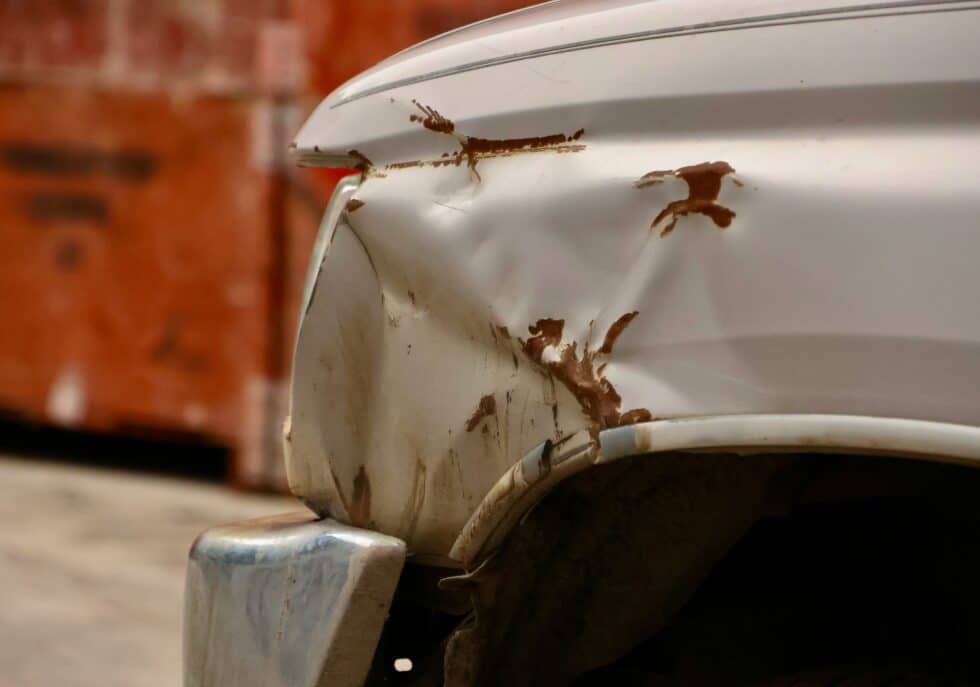
Rust acts like financial termite damage for your vehicle. That small bubble on your fender isn’t just a cosmetic annoyance, it is an active chemical fire burning through your car’s value. If you ignore it, iron oxide spreads, turning a minor blemish into structural rot that compromises safety.
Catching these spots early preserves the metal integrity and saves you thousands in fabrication work later. This guide details the exact protocols we use at Syed Brothers Auto Body Shop OKC to stop oxidation cold.
Core Insight
- Surface rust moves quickly, treating it immediately stops it from becoming a structural failure.
- 90% of a successful repair happens during cleaning, masking, and sanding, not during the actual painting.
- Distinct differences exist between surface rust (DIY-friendly) and penetrating rust (requires welding).
- Oklahoma City humidity and road treatments act as catalysts for corrosion, making regular maintenance mandatory.
- You must use respiratory protection and eyewear to block hazardous metal particulates and chemical solvents.
Seven-Step Professional Method for Eliminating Car Rust Spots
Eliminating rust demands strict timing. If you rush the chemical flash times, the paint will peel, and the orange stain will return.
Step-by-Step Execution
- Clean and Prep the Area
Start by scrubbing the rusted area with soap and water, then dry it completely. You must apply a grease and wax remover using a clean microfiber towel. This step strips away invisible road oils and silicones that stop paint from bonding to the panel. - Mask the Repair Zone
Protect your healthy clear coat. Use automotive masking tape and paper to build a perimeter roughly 10-12 inches around the damage. This barrier catches overspray and prevents stray sanding marks on the surrounding finish. - Remove the Rust
Mechanical removal works best. For light surface rust, use 180 or 220-grit sandpaper on a block until you see bare, shiny metal. If you see flakes (scale rust), start with 80-grit paper or a wire brush to break the surface, then refine it with 180/220-grit. Finish by feathering the edges, sanding the paint surrounding the bare metal with 400-grit to create a smooth slope between the metal and the old paint. - Treat the Bare Metal
Wipe the sanding dust away with your wax and grease remover. Apply a thin layer of rust converter or self-etching primer. This chemical barrier neutralizes microscopic oxidation and bites into the metal substrate. Follow the manufacturer’s flash time instructions exactly, applying topcoats too soon traps solvents and ruins the finish. - Apply Primer
Spray 2-3 light coats of filler primer over the repair. Extend each pass slightly further than the last to blend the build-up. Filler primer creates a high-build surface that fills minor pitting left by the sanding process. - Apply Color-Matched Base Coat
Once the primer dries, wet-sand it smooth with 400 or 600-grit paper. Clean the area again. Locate your specific paint code on the driver’s side doorjamb. Apply the base coat in sweeping motions, triggering the spray gun before the panel and releasing it after to prevent heavy spots. - Apply Clear Coat and Finish
Wait for the base coat to dry to the touch, then apply 2-3 coats of automotive clear coat. This layer provides gloss and UV shielding. Allow a 24-48 hour cure time. Finally, blend the new clear coat with the old using a fine polishing compound, or wet sand with 2000-grit to match the texture (orange peel) of the factory finish.

Essential Tools and Materials for Small Rust Spot Repair
You cannot get professional results with cheap materials. Automotive paint chemistry requires specific substrates to adhere properly.
Required Equipment Checklist
- Safety Equipment: Iron oxide dust and paint solvents hurt your lungs and eyes. Wear safety goggles to block metal flakes, nitrile gloves to shield skin from chemicals, and an N95 or cartridge respirator.
- Abrasives: A sanding block keeps the repair flat. Stock 80-grit for stripping, 180-220 grit for smoothing metal, and 400-grit for feathering. A wire brush digs out pits where sandpaper cannot reach.
- Chemicals: Isopropyl alcohol or specialized grease remover cleans the surface. A tack cloth grabs fine dust particles right before you spray.
- Coatings: A rust converter (like VHT or Loctite Extend) stabilizes remaining oxide. Self-etching primer bonds to metal, while filler primer smooths the surface. Buy OEM-matched paint and a 2K (two-part) clear coat for durability.
Identifying Rust Levels
Not all corrosion is curable with a spray can. The severity determines whether you need a sanding block or a welding torch.
Stages of Corrosion
Surface Rust
This looks like a powdery orange or brown deposit. It usually starts from a rock chip or scratch. The metal remains solid underneath. This stage responds best to the DIY 7-step method described above.
Scale Rust
If you leave surface rust alone, the metal surface pits and corrodes, creating a rough, scaly texture. Paint often bubbles or lifts around these areas. You can fix this at home, but it requires aggressive grinding with 80-grit abrasives to reach sound metal.
Penetrating Rust
Mechanics call this “car cancer.” The damage eats entirely through the panel. If you press a screwdriver against a bubbling spot and it pushes through, the structural integrity is gone. Fillers like Bondo act as temporary patches, not fixes. This level of damage requires cutting out the infected metal and welding in new steel, a specialized service we perform at Syed Brothers Auto Body Shop OKC.
The Science Behind Oxidation and Why OKC Vehicles Are at Risk
Rust is an electrochemical breakdown, not just simple aging. According to the American Chemical Society, corrosion is a return to a lower energy state, converting refined steel back into iron oxide.
The Mechanics of Decay
This process, known as the “Rust Triangle,” requires three components: an anode (the car’s steel), a cathode (impurities or other metals), and an electrolyte (water). When a scratch exposes the anode to an electrolyte, electrons flow, and the metal degrades.
This chemical reaction has a massive economic footprint. The global cost of corrosion sits at approximately $2.5 trillion, roughly 3.4% of the global GDP. While Oklahoma is not in the heart of the “Salt Belt,” local environmental factors still accelerate this process. High humidity provides the moisture needed for the electrolyte solution. Furthermore, winter road treatments deposit salts that cling to undercarriages, jumpstarting the electrochemical decay.
Proactive Car Care Strategies to Prevent Future Rust
Preventing oxidation costs significantly less than reversing it. A consistent maintenance routine disrupts the Rust Triangle by removing the electrolyte or sealing the anode.
Wash and Seal
Regular washing removes corrosive agents. In OKC, use a car wash with an undercarriage spray to flush road grime from suspension components. Follow this with a sacrificial barrier. Carnauba wax works for short-term gloss, but a ceramic coating offers superior hydrophobic protection, repelling water and contaminants for years.
Inspect Drain Plugs
Water often accumulates inside doors and rocker panels. Locate the drain holes at the bottom of these panels and clear them of debris. If these clog, your car will rot from the inside out, a condition often invisible until the paint bubbles.
Immediate Chip Repair
A $30 touch-up pen can save you a $500 repair. Fill rock chips as soon as they happen to seal the metal from oxygen. For newer vehicles, consider oil-based undercoatings like Fluid Film, which creep into crevices to repel moisture.
When to Visit Syed Brothers Auto Body Shop in OKC
DIY repairs work well for cosmetic surface issues on older daily drivers. However, specific scenarios demand professional intervention to maintain safety and resale value.
If the rust has perforated the metal, structural repairs are necessary. We cut out the compromised steel and weld in new metal, ensuring the frame and body panels regain their factory strength. Large areas of damage or high-visibility panels (like the hood or roof) are difficult to blend with aerosol cans. Our facility uses climate-controlled paint booths and professional spray guns to achieve a flawless, factory-matched finish that stands up to the Oklahoma sun. Whether you need a simple paint restoration, complex collision repair, or aluminum welding, Syed Brothers Auto Body Shop OKC possesses the equipment and expertise to restore your vehicle correctly.
Rust is a time-sensitive issue that directly impacts the safety and market value of your vehicle. While the 7-step DIY method works for minor surface blemishes, significant corrosion requires the precision of professional equipment. Don’t let a small spot turn into a panel replacement. For expert paint restoration, structural rust repair, or collision services, trust the team at Syed Brothers Auto Body Shop OKC. We ensure your vehicle leaves our shop stronger and looking better than the day you bought it. Book your assessment today.
Frequently Asked Questions
Can I Just Spray Paint Over Rust?
No, spraying over rust creates a temporary mask that will fail quickly. Paint creates a film, but it does not stop the chemical oxidation process occurring underneath. The rust continues to spread, eventually lifting the new paint and creating a larger blister.
NACE International (The Corrosion Society) states that coating over active corrosion traps moisture and salts against the substrate, which accelerates the anodic reaction rather than stopping it (NACE International). Furthermore, Axalta Coating Systems technical guides warn that adhesion failure is guaranteed if the substrate is not oxide-free (Axalta). You must mechanically remove or chemically neutralize the rust to a stable state before applying any topcoat.
What Is The Difference Between Surface Rust And Scale Rust?
The difference is the depth of penetration and metal loss. Surface rust is a topical stain on the outer layer of the metal, usually caused by a scratch. Scale rust indicates the metal structure has begun to pit, flake, and degrade, reducing panel thickness.
Popular Mechanics distinguishes surface rust as easily sandable, whereas scale rust requires wire brushing or grinding to remove pitted metal (Popular Mechanics). A study by The Society of Automotive Engineers (SAE) highlights that pitting corrosion (scale) significantly reduces the fatigue strength of the steel (SAE International). Treat surface rust with light sanding, treat scale rust with heavy grinding and filling agents.
How Do I Find The Correct Paint Code For My Car?
You find the code on the Vehicle Information Label, typically located on the driver's side door jamb. This alphanumeric code tells the mixer the exact formula for your factory batch color. It is not generic, it is specific to your VIN's production run.
Sherwin-Williams Automotive Finishes advises that relying on visual matching is inaccurate due to paint fading and batch variances, the OEM code is the only reliable standard (Sherwin-Williams). Haynes Manuals notes that if the sticker is missing from the door, check the glove box, trunk floor, or under the hood (Haynes). Never buy "generic red" or "universal black." Order paint specifically mixed for your OEM code.
Is It Worth Fixing Rust On An Older Car?
Yes, provided the vehicle is mechanically sound or holds sentimental value. Rust spreads. Ignoring a small spot on an older car eventually leads to structural failure in areas like rocker panels, subframes, and brake lines.
Consumer Reports data indicates that visible rust is a primary factor in diminished resale value and can lead to failed safety inspections in states that require them (Consumer Reports). Additionally, the National Highway Traffic Safety Administration (NHTSA) has issued recalls for vehicles where rust compromised suspension components, proving the safety risk (NHTSA). Fix small spots immediately to extend the vehicle's usable life and maintain trade-in value.
Can I Use A Rust Converter Instead Of Sanding?
Rust converter is a supplement to sanding, not a complete replacement. Converters (tannic acid or phosphoric acid-based) work best on a thin layer of remaining rust after you remove loose flakes. They cannot penetrate thick scale or heavy rot.
Eastwood Company, a leader in DIY auto restoration, explicitly states that "loose rust and scale must be removed" for the chemical reaction to convert the iron oxide into iron tannate effectively (Eastwood). 3M Collision Repair technical sheets also require surface abrasion before chemical treatment (3M). Sand the area to remove 95% of the rust, then use the converter to neutralize the microscopic pits you can't reach.
How Much Does Professional Rust Repair Cost?
Professional spot repair typically ranges from $500 to $900 per panel, depending on severity. This cost covers labor for dismantling trim, grinding, welding (if needed), priming, painting, and blending the clear coat into the adjacent panel for an invisible repair.
Industry data from Auto Body News suggests that labor hours for blending and surface prep constitute the majority of repair costs, not the materials (Auto Body News). Car and Driver estimates that proper rust remediation often exceeds $500 due to the specialized equipment required (Car and Driver). For cosmetic spots on new cars, pay the professional rate to protect value. For $2,000 beaters, DIY is the logical financial choice.
What Is The Best Way To Prevent Rust In Oklahoma's Climate?
Regular washing combined with a ceramic coating or sealant offers the best defense against OKC humidity. Washing removes the electrolyte (road salts and dirt) that fuels the corrosion battery. Sealants prevent water from touching the anode (steel).
The Federal Highway Administration reports that de-icing chemicals are a primary cause of vehicle corrosion, necessitating frequent washing in winter (FHWA). Research in Corrosion Science journal confirms that hydrophobic coatings significantly reduce the corrosion rate of steel substrates (Corrosion Science). Wash your car immediately after any winter weather event or heavy rain to flush contaminants.
How Long Does A DIY Rust Repair Typically Last?
A well-executed DIY repair generally lasts 1 to 3 years. Aerosol clear coats lack the hardeners (isocyanates) found in professional 2K clear coats, making them less resistant to UV rays, chemicals, and physical abrasion.
PPG Refinish training materials explain that cross-linked (2K) urethanes provide superior film thickness and durability compared to 1K aerosol lacquers (PPG). Hemmings Motor News notes that rattle-can repairs are often temporary fixes that require maintenance (Hemmings). Monitor the repair area every 6 months. If it dulls or chips, re-apply the clear coat.
What Is The Flash Time Between Paint Coats?
Flash time is typically 10 to 15 minutes, but varies by humidity and temperature. Flash time is the period allowed for solvents to evaporate from the wet paint. If you spray the next coat too soon, the solvents get trapped, causing bubbles ("solvent pop") or peeling.
Valspar Automotive technical data sheets emphasize that failing to observe flash times leads to soft films and loss of gloss (Valspar). DuPont (Axalta) guidelines suggest extending flash times in high-humidity environments (Axalta). Read the can. In humid OKC summers, add 5 minutes to the manufacturer's recommended flash time.
Does Vinegar Or Baking Soda Actually Remove Car Rust?
They remove light surface stains but are ineffective for automotive scale rust. Vinegar is a weak acid that dissolves surface oxidation slowly. It lacks the strength to strip heavy automotive corrosion efficiently.
The American Chemical Society explains that while acetic acid (vinegar) reacts with iron oxide, the reaction rate is too slow for heavy industrial corrosion compared to phosphoric acid-based removers (ACS). The accumulation of residue from baking soda can also interfere with paint adhesion if not neutralized (Journal of Protective Coatings). Skip the kitchen pantry. Use dedicated automotive-grade phosphoric acid rust removers for reliable results.
Why Is My Paint Bubbling If I Don't See Any Orange Rust?
Bubbles indicate rust is attacking from the back side of the panel. Moisture and salt have penetrated the metal from the rear (inside the wheel well or door cavity) and pushed the paint up. The metal is likely perforated.
I-CAR (Inter-Industry Conference on Auto Collision Repair) identifies "blistering" as a sign of substrate failure often linked to perforation corrosion (I-CAR). Syed Brothers Auto Body technicians confirm that by the time a bubble appears, the metal behind it is usually compromised. Do not sand the bubble from the front, it will just leave a hole. Inspect the back of the panel, you likely need a welded patch.
When Should I Choose A Ceramic Coating Over Traditional Wax?
Choose ceramic coating for long-term durability and superior environmental protection. Wax sits on top of the paint and lasts 1-3 months. Ceramic coatings chemically bond to the clear coat, creating a hard, hydrophobic shell that lasts for years.
Detailing Success studies show that ceramic SiO2 coatings provide higher resistance to bird droppings, acid rain, and UV damage than natural Carnauba waxes (Detailing Success). Car and Driver reviews highlight that ceramics require less frequent re-application (Car and Driver). If your car is parked outside in OKC, a ceramic coating is the smarter investment for rust prevention.