
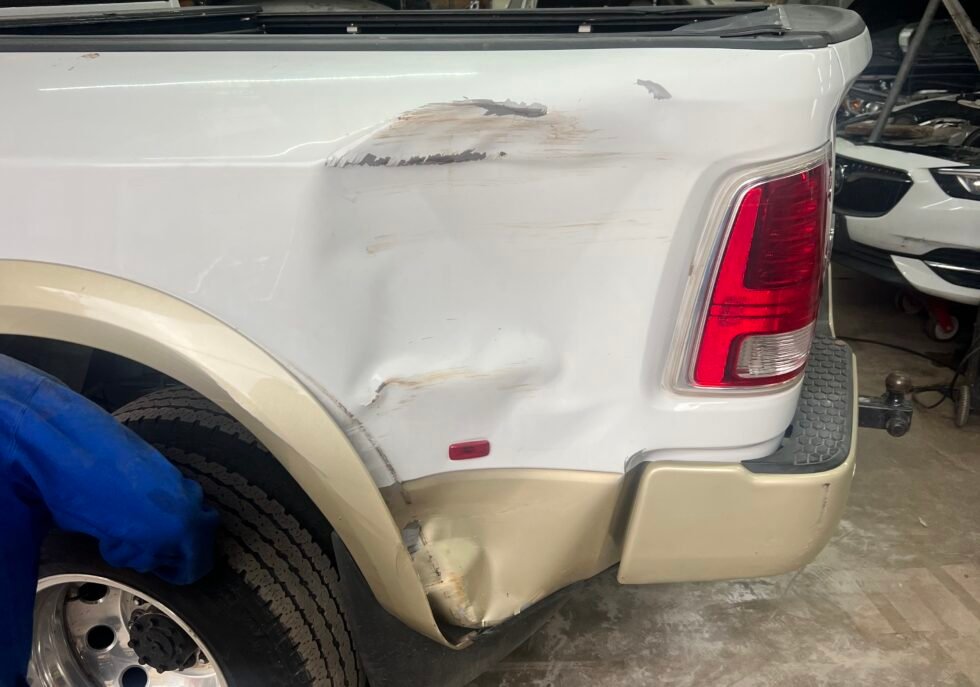
That sickening crunch of metal against concrete ruins your day instantly. Once the adrenaline fades, the panic hits your wallet. You need to know if this wreck will drain your savings or if insurance can fix it without doubling your premiums next month.
This guide tackles the financial reality of fixing vehicle dents and paint. We break down the price gap between small dings and major collision damage, anywhere from $300 to over $2,500. You’ll see how technical details like aluminum panels, pearl coats, and sensor recalibration change your final bill. We also compare the cost of Paintless Dent Repair (PDR) against traditional bodywork and offer a game plan for choosing between paying cash or filing a claim.
Salient Points
- Traditional repair with paint usually costs between $300 and $2,500, based on the damage.
- OKC shops charge $100 to $150 per hour, reflecting the cost of doing business in the metro area compared to rural Oklahoma.
- Aluminum parts cost 25% to 40% more to fix than steel, resetting ADAS sensors adds $200 to $1,000.
- Tri-coat or pearl finishes spike costs by $200 to $500 per panel.
- Filing a claim for small hits can trigger a 40% to 45% rate hike. Paying cash is often smarter for bills under $2,000.
Total Cost Breakdown for Professional Dent Repair and Painting in Oklahoma City
Expect to pay between $300 and $2,500 to fix a dent and restore the paint in 2024. The spread is wide because damage varies wildly. A door ding from a parking lot takes far fewer resources than a fender crushed in a side-impact collision.
Your bill starts with local labor rates. In Oklahoma, location drives the price. Rural shops might quote $75 per hour, but shops in metropolitan hubs like Oklahoma City typically charge between $100 and $150 per hour. This rate covers the overhead of the advanced equipment needed for modern cars. Syed Brothers Auto Body Shop OKC builds estimates based on this skilled labor and the cost of premium automotive paints needed for a factory-grade finish.
Estimated Cost by Dent Severity
Dent Severity | Approximate Size | Estimated Cost Range (OKC) |
Minor | Quarter to Tennis Ball | $300 – $750 |
Medium | Baseball to Football | $750 – $1,500 |
Major/Complex | Large Panel / Deep Crease | $1,500 – $4,000+ |
Price Ranges Based on Dent Size and Damage Severity
Shops price repairs based on physical dimensions, depth, and where the damage sits relative to body lines.
Small Dents
Impacts the size of a quarter often come from shopping carts. If the paint is scratched, Paintless Dent Repair (PDR) won’t work. Fixing and painting a single panel for this damage usually runs $300 to $750. The technician pulls the metal back to shape, applies a thin layer of body filler to smooth it out, sands it flat, primes it, and blends new paint into the surrounding panel so the repair disappears.
Medium Dents
Baseball-sized dents or those with moderate creasing need aggressive metalwork. Prices here jump to $750 to $1,500. Technicians spend more hours reshaping the metal to keep filler use low. This level of damage often forces the painter to blend color into adjacent panels (fenders or doors) to make sure the color matches under direct sunlight, which drives up material costs.
Large or Complex Dents
When damage spans a large part of the panel or crushes a sharp body line, costs hit $1,500 to $4,000 or more. Rebuilding a sharp body line takes expert metal sculpting. Often, the labor to fix this level of damage costs more than a brand-new part. In these cases, Syed Brothers Auto Body Shop OKC frequently recommends a full Original Equipment Manufacturer (OEM) panel replacement to ensure structural safety and a cleaner look.
Technical Factors That Determine Your Final Auto Body Estimate
Modern cars aren’t just steel sheets, they are complex mixes of materials and electronics. These hidden factors often shock owners when the final bill arrives.
Material Composition
Manufacturers use aluminum to cut weight and save fuel. Fixing an aluminum hood or door costs 25% to 40% more than fixing steel. Aluminum lacks the “memory” of steel, it doesn’t snap back to its original shape. It demands specialized heating, separate tools to stop corrosion, and specific welding skills.
Vehicle Make and Model
Luxury cars from brands like Mercedes-Benz, BMW, or Audi have higher repair bills. These cars use specialized assembly methods (like rivets and bonding agents rather than welds) and the parts carry a higher price tag.
Advanced Safety Tech (ADAS)
Most cars made after 2016 have Advanced Driver-Assistance Systems (ADAS). Sensors and cameras for blind spots, lane-keeping, and parking live in bumpers and mirrors. A minor fender bender can knock these sensors out of alignment. Body Shop Business reports that recalibrating these systems is a massive cost driver. Removing, reinstalling, and resetting these sensors adds $200 to $1,000 to the bill. If skipped, your safety features might fail when you need them.

The Impact of Paint Color and Complexity on Restoration Pricing
Paint is one of the most expensive liquids you can buy. Your car’s specific color code dictates the material cost and the labor needed to spray it.
- Solid Standard Colors: Basic black, white, or red are usually the most affordable. They are easier to match and take fewer steps to spray.
- Metallic Colors: These paints have tiny metal flakes that sparkle. The painter must use specific air pressure and technique so the flakes lay down exactly like the factory finish. This takes more time.
- Pearlescent and Tri-Coat Finishes: This is the premium tier. JD Power notes that painting complexity varies by color. Tri-coats use three stages: a base color, a translucent mid-coat (the pearl), and a clear coat. Matching this takes high-level skill. A tri-coat finish can add $200 to $500 to a single panel repair because the painter must blend the pearl coat further out onto other panels to fool the eye.
Paintless Dent Repair vs Traditional Body Work with Painting
Knowing the difference between Paintless Dent Repair (PDR) and traditional bodywork can save you thousands. The deciding factor is the condition of the paint.
Paintless Dent Repair (PDR)
PDR works best for shallow dents where the paint isn’t broken. Technicians use rods to massage the dent out from the back of the panel.
- Cost: $75 to $250 per dent.
- Pros: Fast turnaround (often same-day), keeps factory paint, costs less.
- Cons: Can’t fix sharp creases, stretched metal, or chipped paint. Progressive highlights that PDR is only an option when the paint is intact.
Traditional Repair with Paint
You must use this method when paint is compromised, metal is stretched too far, or damage hits a structural edge.
- Cost: $300 to $2,500+.
- Process: Grind to bare metal, weld/pull, fill, block sand, prime, paint, clear coat.
- Why Choose It: It is the only way to stop rust on chipped areas and return the car to showroom condition after a crash.
Feature | Paintless Dent Repair (PDR) | Traditional Repair & Paint |
Paint Condition | Must be intact | Scratched, chipped, or cracked |
Damage Type | Round, shallow dents | Sharp creases, collision damage |
Timeframe | 1 – 2 Days | 3 – 10 Days |
Cost | Low ($) | High ($$$) |
Navigating Insurance Claims and Deductibles for Dent Damage
Using insurance is a financial calculation, not just a box to check. You have to weigh your deductible against the risk of paying higher premiums later. Understanding how car insurance deductibles work can help you make that decision.
Coverage Types
- Collision Coverage: Pays for damage if you hit another car, a pole, or a mailbox.
- Comprehensive Coverage: As Allstate defines it, this covers non-collision events like hail (common in OKC), falling branches, or vandalism.
The Financial Calculation
Get an estimate from Syed Brothers before you file. If the repair is $1,200 and your deductible is $500, the insurance check is only $700. However, filing an at-fault collision claim can spike your premiums by 40% to 45%, according to Forbes Advisor. This increase sticks for 3 to 5 years. You will likely pay more in increased premiums than the $700 payout. If the repair is less than twice your deductible, paying cash is usually the smarter move.
Why Local Expertise Matters for Collision Repair in Oklahoma City
Oklahoma is a tough environment for cars. We deal with extreme temperature swings, intense UV rays, and brutal hailstorms. These factors change how body filler cures and how paint ages.
A national chain might treat a repair in OKC the same as one in Seattle, but local variables matter. Syed Brothers Auto Body Shop OKC tailors repairs to this climate. Proper sealing and aluminum welding techniques are vital here to stop moisture from causing rust during humid months. Also, local shops have relationships with local insurance adjusters, which speeds up approval for supplements, those extra costs found after the car is taken apart. Choosing a local expert ensures your paint is mixed and cured to handle Oklahoma weather.
Fixing a dent is about more than smoothing out metal, it’s about balancing cost, looks, and the long-term value of your car. Whether it’s a door ding or major collision damage, knowing the cost drivers, from aluminum labor rates to tri-coat paint premiums, helps you make the right choice. Don’t let a dent lower your vehicle’s value or your pride. Contact Syed Brothers Auto Body Shop OKC today for a precise, honest estimate on your dent repair and paint restoration. We provide professional collision repair near Schrock Park in Tuttle and throughout Oklahoma.
Frequently Asked Questions
What Is The Average Cost To Fix A Dent And Repaint A Car Door In OKC?
To make the door match the rest of the car, technicians often blend paint into the fender and rear quarter panel. JD Power notes that painting is labor-intensive, and with OKC rates averaging $100-$150/hr, a 10-hour job hits $1,000 in labor before materials are even added. The cost to repair and repaint a car door can also depend on whether the estimate includes "R&I" (Remove and Install) of trim pieces. Skipping this step saves money upfront but leads to peeling paint around handles later.
Does Every Dent Repair Require Painting?
No, not every dent requires painting. If the paint surface isn't broken and the metal isn't stretched near the edge, Paintless Dent Repair (PDR) can fix it without new paint.
Painting becomes mandatory only if the paint is cracked, chipped, or scratched down to the primer or metal. This is critical to prevent rust. Progressive suggests requesting a PDR assessment first. It is significantly cheaper and keeps your factory clear coat intact, which is better for resale value.
How Long Does A Traditional Dent Repair And Paint Job Take?
A traditional repair usually takes between 3 to 5 business days. This isn't just active work time, it includes disassembly, bodywork, curing time for primer, sanding, painting, and clear coating.
Paint layers need specific drying windows. Rushing this process causes "solvent pop" (bubbles) or peeling. A simple bumper might take 2 days, but a structural collision repair can take 2 weeks. Plan for a rental car for at least a week. Weather in OKC (humidity and temp) can slightly extend curing times for a proper finish.
Will A Car Insurance Claim For A Dent Increase My Monthly Premium?
Yes, filing a claim for a dent often increases premiums, especially for collision claims. Data from Forbes Advisor indicates a single at-fault accident can raise rates by an average of 40% to 45%.
This "surcharge" typically follows your policy for 3 to 5 years. While comprehensive claims (hail/vandalism) trigger smaller hikes than collision claims, frequency matters. If the repair cost is close to your deductible, do not file. You will pay more in increased premiums over three years than the insurance company pays out for the repair.
Is It More Expensive To Repair A Dent On An Aluminum Panel?
Yes, aluminum panel repair is 25% to 40% more expensive than steel. Aluminum has no "metal memory," meaning it doesn't want to snap back to its original shape. It requires careful heating and massaging.
The IIHS notes that repairing lightweight materials requires specialized training and dedicated tools to prevent galvanic corrosion (rust caused by mixing steel dust with aluminum). If you drive a newer Ford F-150 or a luxury vehicle, verify the shop has a dedicated aluminum clean room or specific aluminum tooling before booking.
Why Is Tri-Coat Or Pearl Paint More Expensive To Repair?
Tri-coat paints cost more because they involve a three-stage application process. A standard job is Base + Clear. Tri-coat is Base + Pearl (Mid-coat) + Clear.
The painter must spray an extra layer of material and match the "flop", how the pearl reflects light. This requires blending over a much larger area to hide the repair. Budget an extra $200 to $500 per panel if your car has a "White Diamond," "Ruby Red," or similar pearlescent finish.
Can You Match The Paint Exactly On An Older Vehicle?
Yes, professional shops can match older paint, but it requires blending. Factory codes give the original recipe, but the sun fades paint over time. A fresh mix of the factory code will look too dark or bright against an old hood.
Technicians tint the new paint to match the faded color and then spray (blend) it gradually into the surrounding panels. Never accept a "butt match" (painting only the damaged panel edge-to-edge) on an older car. It will look like a patchwork quilt. Blending is non-negotiable for a seamless look.
Does Syed Brothers Auto Body Shop OKC Help With The Insurance Claim Process?
Yes, professional body shops act as intermediaries between the vehicle owner and the insurer. They handle the technical negotiations, including filing "supplements" for hidden damage discovered after disassembly.
Local shops advocate for proper repair procedures, like scanning ADAS sensors, that insurers might try to skip to save money. Choose a shop that works for you, not one on the insurance company's "preferred" list (DRP) if you want to ensure OEM standards are prioritized over speed and cost-cutting.
Should I Pay For A Small Dent Repair Out Of Pocket?
If the repair cost is under $2,000, paying out-of-pocket is often advisable. Do the math. If your deductible is $500 and the repair is $900, the insurer only pays $400.
That $400 check could trigger a premium hike costing you $1,500 over the next three years. NerdWallet advises saving claims for catastrophic losses to keep your CLUE report clean. For smaller problems that you can address without an insurance claim, such as repairing small rust spots on a car early, taking care of them can help prevent them from developing into more extensive damage. Ask for a "customer pay" estimate first. Shops sometimes offer slightly different rates if they know they aren't dealing with insurance administrative overhead.
How Much Does It Cost To Recalibrate Sensors After A Bumper Dent Repair?
Calibration typically costs between $200 and $1,000. Sensors for automatic braking and lane-keeping are often mounted in bumpers or behind grilles. Even a 1-degree misalignment causes failure.
Body Shop Business reports that as ADAS becomes standard, this "invisible" cost is now a staple of collision estimates. It requires expensive targets and diagnostic tablets. Never wave this off. If you skip calibration to save money, your emergency braking system may not engage when you need it to prevent a crash.
Is Paintless Dent Repair (PDR) Always Cheaper Than Traditional Repair?
Almost always, provided the damage qualifies for PDR. PDR is pure labor, there are no costs for fillers, primers, paints, or clear coats.
PDR takes hours, not days. However, if the metal is stretched too far, PDR might only get it 90% perfect. If you are a perfectionist and the metal is severely stretched, traditional repair might be the better choice despite the higher cost, as it guarantees a flat, perfect surface.
Does A Professional Dent Repair Show Up On A CarFax Report?
It depends on who pays for the repair. If you file an insurance claim, it will almost certainly appear on a CarFax or AutoCheck report.
If you pay a private shop like Syed Brothers directly without involving insurance, the repair is rarely reported to these databases. Paying out-of-pocket for minor damage keeps your vehicle history report "accident-free," which preserves resale value when you trade the car in.
What Is The Difference Between A Minor Ding And A Complex Dent In Terms Of Cost?
The difference is roughly $1,000 to $2,000. A parking lot door impact usually affects only the skin of the panel (cost ~$400). A complex dent involves the safety intrusion beam or structural frame.
Complex dents require stripping the interior, measuring structural alignment, and extensive metal finishing. If the door doesn't close properly or the window drags, it is a complex dent. Expect the estimate to be on the higher end of the spectrum.