
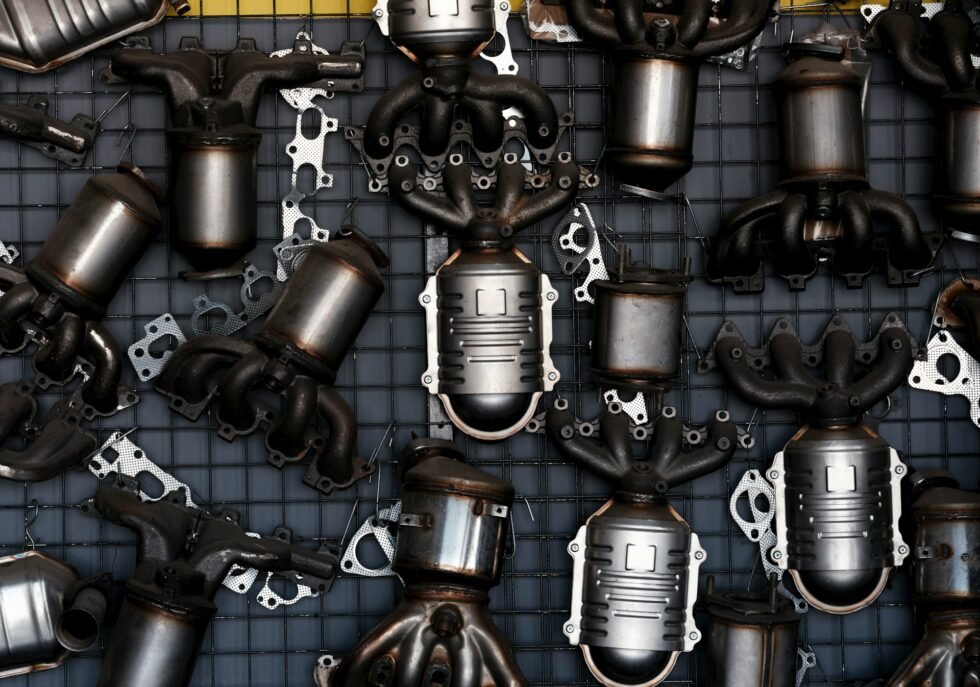
You hit the remote start or turn the key, expecting a quiet idle. Instead, a thunderous roar, like a chainsaw inside a metal trash can, rips through the neighborhood. That sound is the sound of money leaving your bank account.
In less than two minutes, thieves in Oklahoma City have stripped your vehicle of its catalytic converter, leaving you with a massive repair bill and a car that sounds like a dragster. This isn’t just vandalism; it is a specialized harvest of metals more expensive than gold, and it is happening in driveways from Edmond to Norman.
Main Points
- The theft is driven by rhodium, which traded between 4,500 and 5,000 dollars per ounce in mid-2024.
- A thief with a battery-operated saw can slice a converter off a truck in under 90 seconds.
- The Toyota Prius (Gen 2) offers the best metals, while Ford F-Series trucks offer the easiest access.
- Installing a 150 to 600 dollar shield is the only reliable way to stop a theft that could cost 4,000 dollars to fix.
The Real Reason Catalytic Converter Theft Is Skyrocketing In Oklahoma City
Auto part theft in OKC is not a random act of destruction. It is a precise economic operation fueled by global mining deficits. Your catalytic converter looks like a rusted muffler part, but it functions as a high-tech chemistry lab.
Inside that steel shell sits a ceramic honeycomb structure dusted with platinum-group metals (PGMs). These rare elements scrub toxins from your exhaust, but they are incredibly scarce in the Earth’s crust.
When the trading price of these metals jumps, theft reports in Oklahoma spike in unison. Local police often see a direct line between the spot price of rhodium and the number of victims filing reports. Thieves aren’t stealing a car part to use it; they are harvesting raw materials that are untraceable and instantly liquid at the right scrap yard.
The Three Precious Metals Making Your Exhaust A Gold Mine
Your converter holds value because of three specific elements: Rhodium (Rh), Palladium (Pd), and Platinum (Pt). These “Platinum-group metals” are unique. They survive extreme heat and force chemical changes in exhaust gases. Because mining them is difficult and dangerous, the few grams inside your exhaust system are worth hundreds on the black market.
Rhodium: The Most Valuable Metal
Rhodium drives this crime wave. It is the rarest non-radioactive metal on earth. As of June 2024, rhodium trades between 4,500 and 5,000 dollars per troy ounce. Market data from Kitco shows this metal hit an insane peak of 29,000 dollars per ounce in 2021, creating the modern theft epidemic. It is unrivaled at stripping nitrogen oxides (NOx) from exhaust fumes.
Palladium: The Hydrocarbon Scrubber
Palladium is denser and handles the unburnt fuel in gasoline engines. It trades in the 900 to 1,000 dollar range per troy ounce. Manufacturers pack this into internal combustion engines to satisfy EPA clean air mandates.
Platinum: The Diesel Standard
Platinum is the workhorse, used for oxidation in both gas and diesel systems. Prices hover between 950 and 1,050 dollars per troy ounce. While less volatile than rhodium, its consistent value makes even old, high-mileage converters worth cutting.
How These Rare Earth Elements Help The Environment And Attract Thieves
Federal law requires every gas-powered vehicle to scrub its own emissions. The catalytic converter does this through intense chemistry. Hot exhaust gas is forced through a ceramic monolith, a honeycomb structure that maximizes surface area. This honeycomb is dipped in the PGMs listed above.
When deadly gases like carbon monoxide and nitrogen oxides hit these metals, they instantly break apart and reform as harmless water vapor and carbon dioxide.
Thieves steal these units because recycling them is lucrative. Illegal processing labs can recover 2 to 7 grams of palladium or 1 to 2 grams of rhodium from a single can. It sounds small, but the math works. A street thief might get 50 to 300 dollars per unit, but the refined metal sells for thousands further up the supply chain.
The Most Targeted Vehicles In Oklahoma
Thieves are practical. They hunt vehicles that offer the path of least resistance or the highest payout.
The Toyota Prius Factor
The Generation 2 Toyota Prius is the “white whale” for converter thieves.
- Cleaner Metals: The hybrid engine runs less often than a standard gas engine. This keeps the converter cooler and preserves the rhodium and palladium, making them more valuable to recyclers.
- Higher Load: Toyota packed these specific converters with more precious metals to keep the catalyst hot during frequent start-stop cycles.
High-Clearance Vehicles
Trucks and SUVs are targets of convenience.
- Access: A thief can slide under a Ford F-Series or Toyota Tundra without a jack. This speed keeps them from getting caught.
- Engine Size: Big engines need big converters. A Toyota Tundra has four catalytic converters, making it a massive payday for a single stop.
Vehicle Risk Profile
Vehicle Type | Risk Level | Primary Reason for Theft |
Toyota Prius (Gen 2) | Extreme | The highest concentration of preserved precious metals. |
Ford F-Series | High | Zero jack required, the most common truck in OKC. |
Honda CR-V | High | Easy ground clearance, the exhaust is exposed. |
Toyota Tundra | High | Contains four converters, high clearance. |
Honda Element | High | High clearance, very valuable converter model. |
The National Insurance Crime Bureau (NICB) notes that states with high truck ownership, like Texas and Oklahoma, consistently rank at the top for these thefts due to the availability of high-clearance targets.

Ninety Seconds To Disaster
Speed is the thief’s best defense. A practiced crew can finish the job in less than 90 seconds.
The Tool of Choice
The battery-powered reciprocating saw, or Sawzall, changed the game. With a carbide blade, it eats through steel pipe in seconds. It screams at about 100 decibels, but the job is done so fast that by the time a homeowner looks out the window, the car is gone.
When and Where Attacks Occur
Nighttime is preferred, but broad daylight thefts in big lots are common.
- Apartment Complexes: Rows of cars and limited security patrols make for easy pickings.
- Airport Parking: Long-term lots are a buffet of unattended cars.
- Fleet Lots: Commercial trucks parked overnight are ideal because crews can hit five or six vehicles in a row.
The Traceability Problem Fueling The Black Market
OKC police have a hard time stopping this because the stolen goods look identical to legal parts. Unlike an engine or transmission, most factory converters do not have a Vehicle Identification Number (VIN) stamped on them. If police pull over a van full of cut converters, they often cannot prove they are stolen.
This legal blind spot powers organized crime. The Department of Justice reports that theft rings use middlemen to buy from street thieves, aggregate the metal, and ship it across state lines to smelters who don’t ask questions. Without a VIN, the converter is just scrap metal, and the victim gets nothing back.
Restoring Your Vehicle At Syed Brothers Auto Body Shop OKC
If you get hit, the damage is usually worse than just a missing part. Thieves slash O2 sensor wires, cut cooling lines, and mangle mounting brackets to save time.
The Cost of Replacement
Replacing a catalytic converter hurts your wallet.
- Part Cost: OEM parts are expensive because they contain the same expensive metals that thieves are stealing.
- Labor and Repair: You have to pay for the part, the welding, and the repair of the surrounding wiring.
- Total Estimate: You are looking at a bill between 1,000 and 4,000 dollars.
At Syed Brothers Auto Body Shop OKC, we handle the entire restoration. We assess the undercarriage carnage, source the right parts, and weld the new system to EPA standards. We also recalibrate the oxygen sensors to ensure your check engine light stays off and your car passes inspection.
Physical Deterrents And Security Shields That Actually Work
Police can’t patrol every driveway, so physical denial is your best bet. Make your car a hassle.
Anti-Theft Devices
- Cat Shield / MillerCAT: These are aluminum or stainless steel plates that bolt over the converter. They block the saw blade.
- CatClamp: This cage system uses wire ropes to wrap the converter and lock it to the frame. The cables are a nightmare to cut.
Cost vs. Benefit
A shield is cheap insurance compared to a replacement.
- Shield Cost: 150 to 600 dollars (installed).
- Replacement Cost: 1,000 to 4,000 dollars.
Thieves want easy money. If they look under your truck and see a steel plate, they will likely move on to the unprotected truck next door.
Low-Cost Protection Strategies For Every OKC Driver
If you can’t buy a shield today, use these tactics to lower your risk.
Paint and Etch
- High-Temperature Paint: Blast your converter with bright orange, high-heat automotive paint. It screams “marked” to police and scrap buyers.
- VIN Etching: Engrave your VIN into the metal. Honest scrap yards won’t touch a converter with a visible VIN that doesn’t match a title.
Defensive Parking
Change how you park.
- Wall Parking: Back into spots against a wall or fence. This blocks access to the rear exhaust, making it hard to get under the car.
- Lighting: Park under streetlights. Thieves hate the spotlight.
- Curb Awareness: Park with your exhaust side tight against the curb. It leaves less room for a thief to work.
Catalytic converter theft in Oklahoma City is a frustrating reality driven by the massive value of rhodium and palladium. The crime takes seconds, but the financial sting lasts for months. Knowing why your truck or hybrid is a target is the first step toward defense. Whether you drive a Prius or a Ford F-150, proactive steps like installing a shield or smart parking can save you thousands.
If you start your car and hear that dreaded roar, Syed Brothers Auto Body Shop OKC is your solution. We provide precise, professional exhaust restoration to get your vehicle quiet, compliant, and back on the road. Don’t let thieves ruin your month. Contact us today to restore your vehicle’s safety and performance.
Frequently Asked Questions
Which Cars Are Most Likely To Have Their Catalytic Converter Stolen?
The Toyota Prius (Generation 2, 2004-2009) and high-clearance trucks like the Ford F-Series are the primary targets. The Prius is the top target because its hybrid engine puts less heat stress on the converter. This leaves the rhodium and palladium inside in near-perfect condition, commanding a premium price from illicit recyclers.
Trucks like the Ford F-150 and Toyota Tundra are targeted because a thief can slide underneath them without a jack, cutting the theft time down to under a minute. If you drive one of these high-risk models in OKC, a physical barrier like a Cat Shield is the only reliable way to deter opportunistic thieves.
Why Is Rhodium So Expensive Compared To Gold?
Rhodium is expensive due to extreme scarcity and unavoidable industrial demand. Rhodium is a byproduct of platinum mining; it has no mines of its own. Supply is incredibly tight, creating price volatility that often exceeds gold by a wide margin.
It is the single most effective element for scrubbing nitrogen oxides (NOx) from exhaust. Automakers must buy it to meet global emissions laws, regardless of the cost. Trading prices peaked near $29,000/oz in 2021 and settled around $4,700/oz in 2024. This high value per gram is the direct reason thieves target your car.
How Much Rhodium Is In A Catalytic Converter?
A standard catalytic converter contains a tiny amount of rhodium, but it is enough to make theft profitable. The average converter holds between 1 and 2 grams of rhodium, alongside small amounts of platinum and palladium.
Even this small amount can be worth hundreds of dollars on the black market, depending on the daily spot price of the metal. Illegal smelters are efficient at extracting these trace metals. When aggregated by organized crime rings, these small amounts turn into millions of dollars in profit.
Do Thieves Need A Jack To Steal A Catalytic Converter From A Truck?
No, thieves almost never use jacks for trucks and SUVs. Vehicles like the Ford F-Series, Silverado, and Honda Element sit high enough off the ground for an adult to slide underneath comfortably.
Skipping the jack makes the crime faster and quieter. A crew can hit a truck and be gone in 60 seconds. While lowering the suspension helps, installing a skid plate or catalytic converter shield is a more practical solution for truck owners.
Can A Stolen Catalytic Converter Cause A Check Engine Light?
Yes. A missing or damaged catalytic converter can trigger the check engine light because it affects the vehicle's emissions system and oxygen sensor readings.
If the warning light comes on after catalytic converter theft, understanding dashboard warning light meanings can help you identify what the vehicle may be telling you.
Does Car Insurance Cover Catalytic Converter Theft In Oklahoma?
Yes, but only if you carry the right policy. Theft falls under "comprehensive" insurance, not collision or liability. If you only have liability coverage, you are paying out of pocket. Understanding how car insurance deductibles work can also help you know what you may have to pay when filing a comprehensive claim.
You must pay your deductible first. If your deductible is $1,000 and the repair is $1,200, insurance only helps you with $200. Check your deductible. Lowering your comprehensive deductible specifically can save you money if you drive a high-risk vehicle.
What Does It Sound Like When Your Catalytic Converter Is Missing?
The noise is immediate, aggressive, and unmistakable. Without the converter and muffler to suppress the engine, your car will sound like a broken motorcycle or a tractor the second you start it.
The roar deepens and gets louder as you accelerate. You will also feel a loss of power. Do not ignore it. Driving without an exhaust system can leak carbon monoxide into the cabin and violate noise ordinances.
How Can I Tell If My Catalytic Converter Was Stolen Or Just Failed?
A quick visual check confirms theft versus mechanical failure. Theft leaves a physical gap in the exhaust pipe. You will see saw marks or fresh metallic cuts where the pipe used to be connected.
Thieves often rip the oxygen sensors out, leaving colored wires dangling under the vehicle. A failed converter (clogged or broken internally) stays attached to the car but triggers a "Check Engine" light or a rotten egg smell.
What Should I Check After A Catalytic Converter Repair?
After a catalytic converter repair, it is important to make sure the vehicle is running properly and that there are no new warning lights, unusual noises, exhaust leaks, or performance issues.
Regular inspections and routine servicing can also help you catch other vehicle problems early. Following a vehicle maintenance checklist can help you keep up with these important checks.
Are There Specific Laws In Oklahoma Against Selling Stolen Catalytic Converters?
Yes, Oklahoma has tightened regulations to choke the black market. The Regulate Metals Industry Act requires scrap dealers to get proof of ownership or a copy of the vehicle title before buying a used converter.
Sellers must provide photo ID, and cash transactions are restricted to create a financial paper trail for police. While these laws help, thieves often bypass them by selling to shady "fence" buyers or moving the metals to states with looser regulations.
How Much Does It Cost To Install A Catalytic Converter Shield In OKC?
Protection is significantly cheaper than replacement. A quality shield (like a Cat Shield) costs between $150 and $450, depending on whether you choose aluminum or stainless steel.
A professional shop usually charges one hour of labor, adding $100 to $150 to the bill. The total usually lands between $300 and $600. Considering a theft can cost $3,000, this pays for itself immediately.
Why are Toyota Priuses targeted more than other hybrids?
The Prius is a victim of its own engineering success and volume. Millions of Gen 2 Priuses are on the road, creating a massive supply of targets.
The Gen 2 converter has a higher loading of PGMs than many modern hybrids. It is considered "high-grade" ore by illegal recyclers. Thieves have targeted this specific car for a decade. They know exactly where to cut to remove it quickly, creating a cycle of repeat victimization.
Does Painting A Catalytic Converter Really Stop Thieves?
Paint is a psychological deterrent, not a physical one. Bright orange high-heat paint tells a thief the part is marked and likely etched, increasing their risk of arrest.
Legitimate recyclers will reject painted converters. This forces the thief to find a black-market buyer, which is more of a hassle. It won't stop a thief who has a buyer who doesn't care. It works best when combined with a physical shield or alarm.
How Long Does It Take An OKC Auto Body Shop To Replace A Stolen Converter?
The timeline relies heavily on the supply chain. The actual work, welding and sensor calibration, usually takes less than a day once the part is in hand.