
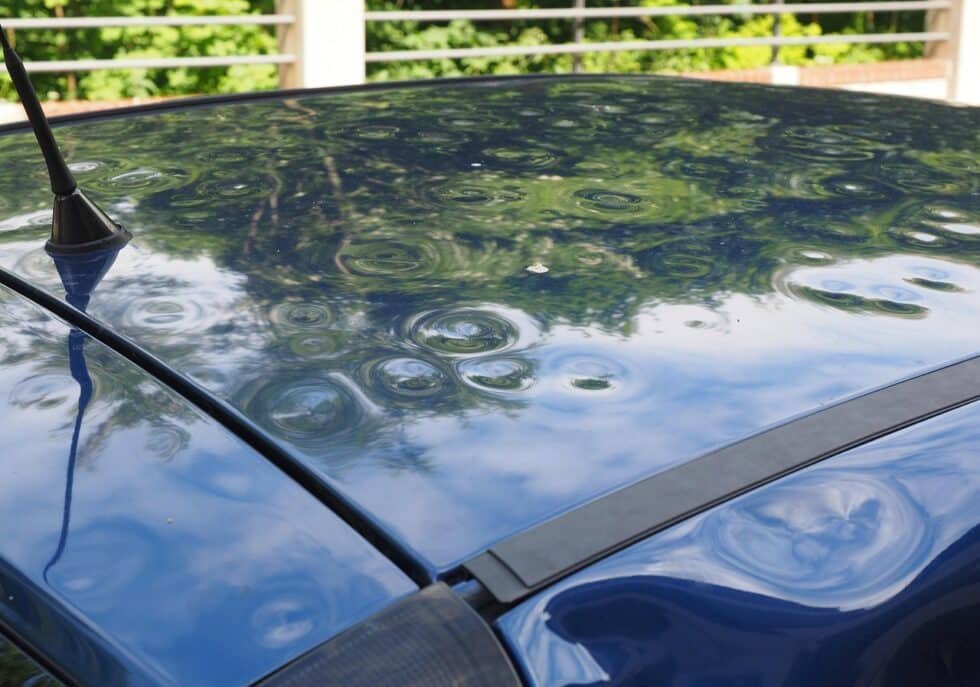
The distinctive clatter of ice pellets slamming against your windshield triggers a specific type of dread for anyone living in the Great Plains. In 2023, severe convective storms, mostly hail, racked up $29 billion in insured losses across the United States, reports Aon’s Weather, Climate and Catastrophe Insight.
For residents of Oklahoma City, the worry isn’t just about the weather, it’s about the financial aftermath. An insurance policy is a legal contract, and knowing the difference between “comprehensive” and “liability” before the sky turns green determines whether you pay a manageable deductible or the entire bill for a new roof.
Essential Lessons
- Hail damage is strictly covered under “comprehensive” auto insurance, liability and collision policies pay nothing.
- While standard policies cover hail, your payout depends entirely on whether you have Replacement Cost Value (RCV) or Actual Cash Value (ACV).
- Oklahoma insurers typically use percentage-based deductibles (1%–5% of the home’s value) for wind and hail, rather than a flat dollar amount.
- If repairs cost roughly 75% of a vehicle’s current market value, the insurer will declare it a total loss.
- You must file claims promptly, waiting too long allows insurers to deny coverage based on policy time limits.
Everything Oklahoma City Residents Need To Know About Hail Damage Insurance Coverage
The quick answer to “does insurance cover hail damage” is usually yes, but only if you hold the specific coverage designed for it. Assumptions here are costly. Auto and home insurance handle falling ice differently, and the “Act of God” clause is the cornerstone of these claims.
Data from the Insurance Information Institute (Triple-I) shows that hail claims are the most common severe weather insurance claim nationwide. In Oklahoma City, geography amplifies this risk. While standard policies list wind and hail as covered perils, your financial recovery depends on exclusions.
You need to verify if your policy has a “cosmetic damage exclusion.” This clause allows an insurer to deny payment if hail dents a metal roof or car hood but doesn’t break the seal or stop it from functioning.

How Comprehensive Auto Insurance Protects Your Vehicle From Hail
Liability insurance is mandatory in Oklahoma to drive legally, but it pays zero dollars for hail damage to your own car. To get repair costs covered, you need comprehensive coverage. This is optional for paid-off vehicles but generally required by lenders if you lease or finance your car.
Comprehensive insurance pays for damage not caused by a crash with another vehicle. This includes:
- Dents to the hood, roof, trunk, and side panels.
- Shattered or cracked windshields and windows.
- Broken side mirrors and light fixtures.
- Water damage resulting from broken glass.
According to J.D. Power, the average repair bill for hail damage to a vehicle ranges from $2,500 to $10,000, depending on severity . Modern trucks and SUVs often use aluminum panels, which require specialized repair techniques. While minor dings usually need Paintless Dent Repair (PDR), deep impacts on aluminum may require full panel replacement. Without comprehensive coverage, you pay 100% of these costs.
Total Loss And Actual Cash Value In OKC Auto Hail Claims
When a storm turns your car into the surface of a golf ball, the insurer does a math problem. If the repair estimate hits 70% to 80% of the vehicle’s Actual Cash Value (ACV), they will likely declare the car a total loss.
The National Association of Insurance Commissioners (NAIC) clarifies that ACV is not what you paid for the car, nor the cost to buy a new one. It is the replacement cost minus depreciation (wear and tear).
Factors Determining Total Loss:
- Vehicle Age and Mileage: High mileage drops the ACV significantly, making a total loss probable even with moderate hail damage.
- Pre-existing Damage: Old dents or rust lower the vehicle’s baseline value before the storm even hits.
- Salvage Value: If the insurer can auction the damaged car for a good price, they are more incentivized to total it.
In OKC, where heavy-duty trucks hold high value, a total loss decision creates a gap. If you owe $30,000 on a truck but the ACV is calculated at $24,000, you are on the hook for the $6,000 difference unless you carry gap insurance.
Homeowners Insurance For Roof And Property Damage In High-Risk Zones
Standard homeowners policies (like the HO-3) generally cover hail damage under “Dwelling Coverage” (Coverage A) and “Other Structures” (Coverage B). State Farm data consistently puts Oklahoma alongside Texas and Colorado as top states for hail losses, which means local policies are stricter than the national average.
Coverage A pays for the main structure, roof, siding, and attached garage. Coverage B pays for detached items like sheds, gazebos, or a separate workshop. The critical detail is whether your policy covers the full replacement cost or just the depreciated value.
Coverage Breakdown
Feature | Dwelling Coverage (Coverage A) | Other Structures (Coverage B) |
What it covers | Roof, siding, windows, and an attached garage. | Detached garage, fences, and sheds. |
Typical Limit | 100% of insured home value. | Usually 10% of Coverage A limit. |
Deductible | Applies (often percentage-based). | Shared with the main claim. |
The Financial Impact Of Replacement Cost Value VS Actual Cash Value for Roofs
The difference between Replacement Cost Value (RCV) and Actual Cash Value (ACV) determines if you get a new roof or a check that barely covers the shingles.
- Replacement Cost Value (RCV): The insurer pays the cost to replace the damaged roof with new materials at current market prices, with no deduction for age.
- Actual Cash Value (ACV): The insurer pays the replacement cost minus depreciation.
As roofs get older, many insurers automatically switch the policy from RCV to ACV to reduce their risk. If you have a 15-year-old roof on an ACV policy, your payout might only cover 40% of the replacement cost. Forbes Advisor warns that older roofs are frequently shifted to ACV terms, sticking homeowners with massive bills. Check your declarations page immediately to see which acronym applies to your roof.
Navigating Percentage Deductibles For Hail In Oklahoma
In many states, homeowners pay a flat deductible (like $1,000) for a claim. In Oklahoma, insurers manage their exposure by using a separate “wind and hail” deductible calculated as a percentage of the home’s insured value.
These deductibles usually range from 1% to 5%. The math can be painful:
- Home Insured Value: $400,000
- 1% Deductible: You pay the first $4,000.
- 2% Deductible: You pay the first $8,000.
- 5% Deductible: You pay the first $20,000.
If a storm causes $15,000 in damage and you have a 5% deductible ($20,000), the insurance company pays nothing. Understanding how car insurance deductibles work can help you determine how much you may need to pay out of pocket after a covered loss. Review your policy annually to make sure you have the cash reserves to cover your specific deductible.
Step-By-Step Guide To Filing A Hail Damage Claim In OKC
How you file determines how fast and how much you get paid. The Balance recommends a strict protocol to avoid common pitfalls.
- If a window is smashed or a skylight cracks, cover it with a tarp immediately. Letting rain soak the interior can cause your claim for water damage to be denied due to negligence. Keep receipts for the tarp.
- Photograph hailstones next to a ruler for scale. Take wide shots of the house or car, then close-ups of specific impacts. Do this before you sweep up.
- Report the loss right away. Give the exact date and time of the storm so it matches official weather reports.
- Before the adjuster arrives, call a local expert like Syed Brothers Auto Body Shop OKC. An independent, detailed estimate gives you leverage to ensure the insurance offer is fair.
- Be there when the insurance adjuster inspects. Walk them through the damage you photographed.
- Compare the insurance offer against your independent repair quote. If they don’t match, your repair shop can provide technical data to justify a supplement.
Why Professional Inspection Matters For OKC Paint Restoration And Glass Repair
Untrained eyes miss the real damage. A car owner might spot five dents on a hood, but a professional inspection under specialized PDR lights often reveals thirty.
Syed Brothers Auto Body Shop OKC uses tactile inspection and specific lighting to find:
- Micro-cracking: Hail impact can cause microscopic cracks in the clear coat. Water eventually enters these cracks, leading to paint failure and rust months later.
- Seal Integrity: Impacts near windshields and sunroofs can break weather seals, causing future leaks.
- Aluminum Stress: Modern aluminum panels react differently from steel. They require specific welding and repair protocols to keep their structural strength.
Relying on a quick look or a smartphone photo estimate usually results in an underpaid claim and unresolved structural problems.
Homeowners worry that filing a claim will spike their premiums. Generally, a single hail claim is an “Act of God” and won’t trigger a direct rate hike for you specifically, unlike a dog bite or at-fault car crash. However, Policygenius warns that frequency is the real danger.
If you file multiple claims in three years, you risk non-renewal. Also, if a massive storm hits OKC and causes losses for thousands of people, the insurer may raise rates for the whole zip code to recover funds, regardless of whether you personally filed a claim.
Timing matters. Most policies have a statute of limitations, usually one year from the date of loss. If you wait too long, the insurer can argue the damage is from a newer, undocumented storm and deny the claim.
Handling hail damage claims in Oklahoma requires speed and a clear understanding of your policy. Whether you’re dealing with a shattered windshield or a battered roof, knowing the difference between ACV and RCV, or collision and comprehensive, is the only way to protect your savings. When the storm passes, you need a partner who can handle both the technical repair and the insurance navigation.
Don’t let hail damage rust your investment. For expert paint restoration, aluminum welding, and precision dent repair, trust Syed Brothers Auto Body Shop OKC. We manage the details so you can drive away with confidence. Contact us today for your comprehensive inspection and estimate.
Frequently Asked Questions
Does My Insurance Cover Hail Damage If I Only Have Liability?
No, liability-only policies do not cover hail damage. Liability insurance is legally structured to pay for damage you cause to other people (bodily injury or property damage), according to the National Association of Insurance Commissioners (NAIC). It contains no coverage for your own vehicle.
If you cannot afford to replace your car out-of-pocket, you must add comprehensive coverage to your policy.
How Long Do I Have To File A Hail Damage Claim In Oklahoma?
Typically, one year, but verify your specific policy contract. While Oklahoma statutes allow up to two years for certain civil actions, most insurance contracts restrict the filing window to one year from the "date of loss."
File immediately. Delays make it hard for adjusters to link damage to a specific storm, giving them grounds to deny the claim based on "wear and tear."
Is Hail Damage Considered An Act Of God For Insurance?
Yes, hail is classified as an "Act of God" or a comprehensive claim. This term refers to natural events beyond human control. The Insurance Information Institute confirms that policyholders are generally not penalized for these claims individually, unlike at-fault accidents.
Don't be afraid to file a legitimate hail claim. These affect your risk profile differently from collision claims.
What Is A Cosmetic Damage Exclusion In A Homeowner's Policy?
A clause stating the insurer won't pay for hail damage that affects appearance but not function. This is common with metal roofs. If hail dents the metal but the roof doesn't leak, the insurer owes you nothing.
If you have a metal roof, read your endorsements. You might be paying for coverage that won't restore your home's curb appeal.
How Much Does It Cost To Fix Hail Damage On A Car In OKC?
Repairs typically run between $2,500 and $10,000+. J.D. Power reports that costs fluctuate based on the vehicle's material (aluminum vs. steel) and the method needed (PDR vs. panel replacement). Severe storms can total a car instantly.
Get a quote from Syed Brothers Auto Body Shop OKC, to know the real cost before you decide to open a claim.
Will My Homeowners' Insurance Drop Me After One Hail Claim?
One claim is usually safe, but multiple claims can lead to non-renewal. Policygenius data indicates that filing two or more claims within a 3-to-5-year window flags a property as high-risk, which may cause the insurer to cancel the policy at renewal.
If damage is only slightly above your deductible, consider paying out of pocket to keep your "claims history" clean for a major disaster.
Does Insurance Cover Damage From A Tornado While Driving?
Yes. Tornado damage may be covered under comprehensive auto insurance, depending on your policy. If severe weather catches you on the road, knowing what to do immediately if you encounter a tornado while driving can help you respond safely and reduce the risk of further damage.
Do I Have To Pay My Deductible For Hail Damage?
Yes, the deductible is your contractual share of the repair cost. It is insurance fraud for a shop to "waive" or "absorb" your deductible by inflating the bill. This is illegal in many states and breaches your insurance contract.
Maintain an emergency fund specifically to cover this deductible so you aren't caught off guard.
Can I Choose My Own Auto Body Shop For Hail Repairs In Oklahoma?
Yes, you have the legal right to choose your repair facility. "Steering," when an insurer forces you to use their preferred shop, is illegal. They can recommend, but you decide.
Select a shop like Syed Brothers that works for you, ensuring the repair prioritizes quality over the insurance company's cost-cutting measures. We serve drivers throughout Oklahoma, including those looking for auto body shop and collision repair near Newcastle Casino.
What Is The Difference Between PDR And Traditional Dent Repair?
PDR massages dents out from behind the panel; traditional repair uses body filler and repainting. Paintless Dent Repair (PDR) keeps the original factory paint intact and is faster. Traditional repair is necessary if the paint is cracked or the metal is stretched too far.
PDR is better for resale value, but a professional must verify the paint is intact enough to handle the process.
How Does An Insurance Adjuster Determine Hail Damage On A Roof?
They count "hits" inside a 10x10-foot test square. Adjusters look for bruised shingles, granule loss, and dents in soft metals (vents). A specific count (e.g., 8-10 hits per square) is required to total the roof slope.
Have a trusted contractor present during the adjustment to point out damage the adjuster might miss.
Does Insurance Cover Hail Damage To A Detached Garage?
Yes, usually under Coverage B (Other Structures). Standard HO-3 policies allocate a percentage (often 10% of the dwelling limit) for detached structures. Check that the replacement cost of your garage doesn't exceed this 10% cap. If you have a high-end workshop, you may need to increase this specific coverage.
Should I File A Claim If The Damage Is Less Than My Deductible?
No, the insurer will pay nothing, but the claim effectively goes on your permanent record. A "zero-pay" claim is still recorded on your CLUE (Comprehensive Loss Underwriting Exchange) report, which can increase future rates. Always get a professional estimate before calling your insurance agent to open a claim.