
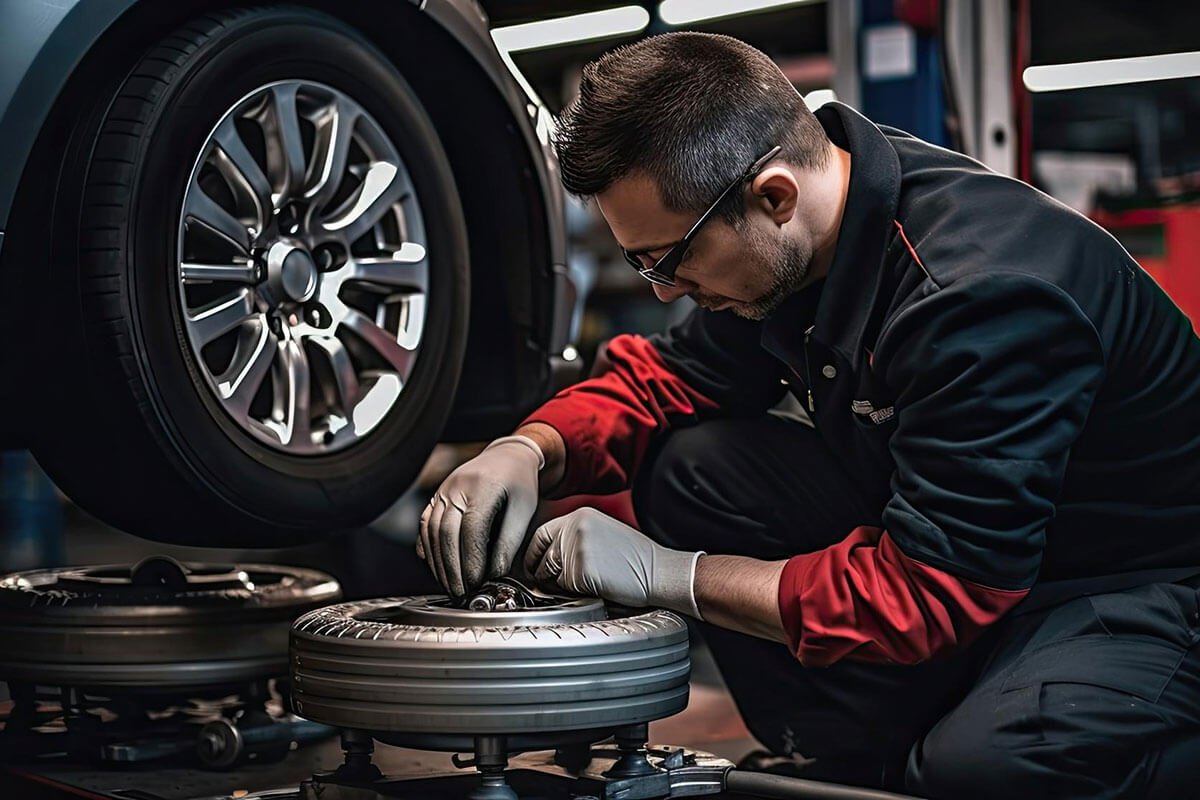
Your steering wheel shouldn’t feel like an arm-wrestling match. When you fight your car to stay in a lane on I-40, you aren’t just dealing with a minor annoyance. You are actively grinding away dollars in tire rubber and fuel. That subtle pull to the left or the low hum from your tires is your suspension screaming that the geometry is broken. Whether caused by an OKC pothole or a curb check, ignoring these mechanical cries turns a simple adjustment into a catastrophic repair bill.
This article breaks down the physical evidence of alignment failure. You will learn how misalignment destroys fuel economy, confuses modern safety computers, and shreds tires. We help you distinguish between a harmless road drift and a critical suspension failure so you can keep your vehicle efficient and safe.
Important Takeaways
- Correct alignment reduces rolling resistance, improving gas mileage by up to 10% (Car Care Council).
- A toe setting off by just 1/8th of an inch drags tires sideways for 28 feet per mile, destroying tread.
- Misalignment feeds bad data to Driver Assist Systems (ADAS), potentially disabling lane-keep assist or emergency braking.
- You will learn to spot the difference between a tire balance vibration (up-and-down) and an alignment pull (side-to-side).
- Oklahoma City weather and road conditions are primary factors in accelerated suspension wear.
The Hidden Cost of Misalignment on Your Tires and Fuel Tank
Drivers often treat wheel alignment as optional maintenance, delaying it until they buy new tires. This hesitation drains your bank account through two channels: wasted fuel and ruined rubber. A car fighting its own suspension generates excessive rolling resistance. Your engine burns more gas pushing tires that are dragging sideways rather than rolling straight.
The Car Care Council reports that proper wheel alignment improves fuel efficiency by up to 10 percent. For a daily commuter in Oklahoma City, that equals substantial yearly savings at the pump. The second penalty is tire life. Industry studies show that 50 percent of vehicles on the road have alignment deficiencies. Ignoring this ensures you will replace tires thousands of miles before their warranty guarantees.
At Syed Brothers Auto Body Shop OKC, we see the expensive results of neglected suspension geometry. Our region’s temperature swings warp road surfaces, while potholes batter suspension components. A routine alignment check stops driving stability from degrading into a financial and safety hazard, making it an important part of a vehicle maintenance checklist.
Your Car Pulls or Drifts Consistently to One Side
On a straight, flat highway, your vehicle should track forward with minimal input. If you must hold the steering wheel firmly to prevent the car from changing lanes, or if it veers aggressively when you let go, you have a suspension problem.
This pulling sensation usually indicates issues with caster or toe angles. However, you must rule out environmental factors before paying for repairs.
Diagnosing the Drift:
- Road Crown: Engineers build roads with a slight arch (crown) to drain rain. A slight drift toward the shoulder is normal physics. Test your car in the center of a flat, empty parking lot to confirm the pull is mechanical.
- Tire Pressure: Check your tire pressure first. A deflated front right tire will drag the car hard to the right. Syed Brothers recommends verifying equal PSI across all tires before scheduling diagnostics.
- Brake Issues: If the wheel jerks only when you hit the brakes, or if the car feels like it is dragging an anchor, you likely have a seized brake caliper, not an alignment issue.

Uneven or Rapid Tire Wear Patterns
Tires provide a forensic timeline of your suspension’s health. When angles are correct, the tire contacts the pavement evenly. When geometry shifts, specific strips of rubber bear the entire vehicle load.
Michelin data indicates misalignment is a top cause of early tire death. The physics are brutal: a vehicle with toe alignment off by 1/8th of an inch drags the tires sideways 28 feet for every mile traveled. That friction acts like sandpaper.
Camber Wear and the Tilt of Your Tires
Camber is the vertical tilt of the tire when viewed from the front bumper.
- Negative Camber: The top of the tire tilts in toward the engine. You will see smooth, heavy wear on the inside shoulder of the tire.
- Positive Camber: The top of the tire tilts out away from the car. Wear appears on the outside shoulder.
Toe Wear and Feathering: The Pigeon-Toed Problem
Toe alignment errors cause the fastest tread destruction.
- Feathering: Tread blocks wear smooth on one side and stay sharp on the other. It feels like sawteeth or a cheese grater when you run your hand across the tread.
- The Cause: Tires are pointing in (toe-in) or out (toe-out) relative to the centerline, scrubbing rubber off against the asphalt with every rotation.
Heel and Toe Wear
This looks like scoop marks or “cupping” divots on the tread. It frequently appears on rear tires or vehicles with sport suspensions. While sometimes caused by missed rotations, it often signals worn shocks or struts allowing the tire to bounce aggressively on the road.
Your Steering Wheel is Crooked or Off-Center
Your steering wheel must be level when you drive straight. If the manufacturer logo is rotated left or right while the car moves forward, your alignment is broken. This is not a drift, it is a physical disconnect between the steering rack and the wheels.
This symptom results from incorrect toe angles, usually following an impact. The American Automobile Association (AAA) estimates pothole damage costs U.S. drivers $3 billion annually. In OKC, hitting a deep crater can jar a tie rod or control arm, instantly cocking your steering wheel to the side.
The ADAS Complication:
Modern cars use steering angle sensors to control Lane Keep Assist and Electronic Stability Control. If your steering wheel is crooked, the sensor sends false data to the computer. This can disable car safety features or cause it to brake unexpectedly. Syed Brothers Auto Body Shop OKC restores mechanical alignment and recalibrates these critical safety sensors.
Secondary Indicators
Beyond visual wear and pulling, your car communicates alignment failure through sound and tactile feedback.
Comparison of Symptoms:
Symptom | Probable Cause | Alignment Related? |
Vibration at 55-65 mph | Unbalanced Tires | No (Usually) |
Constant Vibration | Bent Rim or Severe Misalignment | Yes |
Squealing in Turns | Improper Toe Angle | Yes |
Loose/Sloppy Steering | Worn Tie Rods/Ball Joints | Yes |
Steering Wheel Vibration vs. Unbalanced Tires
Drivers often confuse alignment with balance. Unbalanced tires create a rhythmic hop at specific speeds. Severe misalignment, however, causes tires to fight each other, generating a “shudder” or constant vibration through the steering column as the rubber scuffs the road.
Squealing Tires During Low-Speed Turns
If tires squeal during a slow turn into a parking spot, investigate immediately. This noise is rubber dragging across pavement because the toe angle forces the tire sideways rather than allowing it to roll through the radius.
Loose or Wandering Steering
Excessive “play”, turning the wheel an inch without the car responding, is a safety threat. This indicates worn ball joints or tie rod ends. These parts cannot hold an alignment setting, resulting in a wandering vehicle that requires constant correction to stay in a lane.
Understanding Wheel Alignment
Alignment is not just “straightening the wheels.” It is the precise adjustment of suspension angles to factory specifications.
View the car from above. Toe is the direction tires point relative to each other.
- Toe-In: Fronts of the tires point toward each other (pigeon-toed).
- Toe-Out: Fronts point away from each other (duck-footed).
This angle is critical for tire life and straight-line stability.
View the car from the front. Camber is the vertical angle.
- Negative: Leans in. Good for cornering grip, bad for inner tire wear.
- Positive: Leans out.
Incorrect camber shrinks the tire’s contact patch, reducing braking and acceleration traction.
View the steering pivot from the side. Think of a bicycle fork angle. Caster rarely affects tire wear but dictates stability. Positive caster helps the steering wheel return to center after a turn and keeps the car stable at highway speeds.
Professional Collision Repair and Alignment Services in Oklahoma City
After a collision, curb strike, or deep pothole impact in OKC, a basic alignment at a tire shop often fails. Suspension components may be bent, or the frame may have shifted.
Syed Brothers Auto Body Shop OKC delivers solutions beyond the alignment rack. We verify suspension components are structurally sound before adjustment, preventing the “wandering” feel common in rushed repairs.
Our services include:
- Frontend, backend, and side collision repair.
- Seal and aluminum welding for structural integrity.
- Paint restoration and dent repair.
- Auto hail damage repair and glass/windshield replacement.
- Routine maintenance including oil changes.
If your car fights you, do not wait for a blowout. Proper alignment saves fuel, protects tires, and ensures safety. Your vehicle is a complex machine, but it communicates clearly when it is in distress. Whether it is the steering wheel tugging at your hand, the squeal of rubber in a parking lot, or the sight of uneven tread, these signs are urgent warnings. Ignoring them turns a simple adjustment into a costly repair involving new tires and suspension parts.
Syed Brothers Auto Body Shop OKC is your partner in vehicle safety. From precision alignments to structural collision repair, our team ensures your car handles Oklahoma roads safely. Don’t fight your steering wheel, schedule your inspection today and drive with confidence.
Frequently Asked Questions
How Long Does A Wheel Alignment Take At An OKC Shop?
A standard wheel alignment typically takes 60 to 90 minutes. Technicians mount the vehicle on a specialized rack, attach laser sensors to the wheels, and adjust the camber, caster, and toe angles to factory specs. This physical adjustment is usually quick.
Older vehicles with rusted tie rods or modern cars requiring ADAS (Advanced Driver Assistance Systems) recalibration will take longer. According to Kelley Blue Book, if suspension parts are frozen or damaged, the labor time increases significantly. Plan for an hour but ask if the shop has the software to reset steering angle sensors for vehicles made after 2015.
Can A Bad Alignment Cause My Car To Shake At High Speeds?
Yes, though tire balance is the more common culprit. High-speed shaking usually stems from unbalanced tires (weight distribution issues) or bent rims. However, severe misalignment causes tires to drag and scuff, creating a vibration that travels up the steering column.
When toe angles are off, the tires fight for direction. Tire Rack notes that this conflict creates oscillation. If the vibration is accompanied by uneven wear, alignment is the likely cause. Request a "Road Force Balance" and an alignment check together to rule out both weight and geometry issues.
How Often Should I Get My Alignment Checked In Oklahoma City?
Check alignment every 6,000 to 10,000 miles, or with every other oil change. Oklahoma roads are notorious for potholes and thermal expansion joints that shift suspension components. The Car Care Council recommends an annual check as a minimum baseline.
Schedule an immediate check if you hit a large curb or debris. Do not wait for the annual interval if the steering feels loose. Regular checks prevent "silent" wear where the inner tire edge shreds unnoticed until the steel cords are exposed.
Will A Wheel Alignment Fix My Steering Wheel If It Is Crooked?
Yes, centering the steering wheel is a mandatory part of a proper alignment. Technicians adjust the tie rods to ensure the wheels track straight while the steering wheel is locked in the center position.
If the wheel returns to a crooked position days later, it indicates a worn component, such as a steering rack bushing, that wasn't replaced. Hunter Engineering emphasizes that a centered wheel is vital for the steering angle sensor, which tells the stability control system where the driver intends to go.
What Is The Difference Between A Two-Wheel And A Four-Wheel Alignment?
The difference is whether the rear axle is adjusted or just used as a reference. Essential for All-Wheel Drive (AWD) and cars with independent rear suspensions. Technicians adjust rear toe/camber, then align the front wheels to match the rear "thrust line."
Only the front axle is adjusted. This was standard on older trucks with solid rear axles where adjustments were impossible. Always request a four-wheel (thrust angle) check. Even on solid-axle trucks, this ensures the rear axle isn't "dog-tracking" sideways.
How Much Does It Cost To Fix A Car That Pulls To One Side?
Costs range from free (tire pressure) to $500+ depending on the root cause. A standard alignment typically costs between $100 and $200.
If the pull is caused by a seized brake caliper ($150-$400) or a worn ball joint ($200-$500), the price increases. RepairPal data indicates suspension work varies heavily by vehicle make. Never accept a quote without a physical inspection. A pull can be as simple as low air pressure or as complex as frame damage.
Can A Car Need Bodywork After An Alignment Problem?
Yes. An alignment problem caused by a collision or impact may be accompanied by damage to body panels or other parts of the vehicle. If the vehicle needs more than an alignment, knowing how much car bodywork repairs cost can help you understand the potential repair expense.
Can A Parking Lot Accident Affect My Car’s Alignment?
Yes. Even a low-speed impact can affect the wheels, suspension, or steering and cause the vehicle to pull or handle differently. If someone hits your car in a parking lot, knowing what to do if someone hits your parked car can help you take the right steps after the accident.
Can Hitting A Pothole In Okc Ruin My Alignment Instantly?
Yes, a single impact can immediately knock suspension geometry out of spec. AAA warns that hitting a deep pothole generates a force equivalent to a 35 mph collision. This bends tie rods, shifts control arms, or cracks strut mounts.
You will notice an immediate change in the steering center or a new pull to one side. Pothole damage usually affects the caster and toe. Left unchecked, this "instant" misalignment destroys a tire in a few hundred miles.
Is It Safe To Drive My Car If The Alignment Is Off?
It is safe for short trips to the shop, but dangerous for long-term use. A pulling car fatigues the driver. In emergency maneuvers, a misaligned vehicle may oversteer or understeer unpredictably.
The immediate danger is a blowout. Consumer Reports highlights that severe misalignment wears tires down to the cords on the inside edge, leading to sudden failure at highway speeds. Drive directly to a repair facility. Do not embark on road trips with known suspension issues.
Why Do My Tires Squeal When I Turn Into A Parking Spot?
Low-speed squealing indicates incorrect toe angles or severe under-inflation. That squeal is rubber slipping against the pavement. The tire is being dragged sideways because the wheels are not parallel.
It is most audible on smooth concrete (parking garages) or fresh asphalt. If the squeal comes with a "clunk," it suggests worn bushings are allowing alignment to shift dynamically during the turn.
Does A Wheel Alignment Include Tire Balancing?
No, these are two distinct services that address different problems. Adjusts the angles of the suspension (static geometry).
Adjusts the weight distribution of the tire/wheel assembly (rotational physics) by adding small weights to the rim. Shops recommend doing both because they both improve ride quality. Bridgestone Tire advises paying for both when installing new tires to protect the investment.
Do I Need An Alignment After Getting New Tires?
Yes, it is critical to protect your new investment and warranty. If the old tires wore unevenly, the suspension issue remains. Putting new rubber on a misaligned car immediately begins ruining the new tires.
Spending roughly $100 to protect $800+ in tires is smart math. Major manufacturers like Michelin and Goodyear often require proof of alignment maintenance to honor tread-life warranties.
Can A Bad Alignment Affect My Fuel Mileage?
Yes, misalignment forces the engine to burn more fuel to overcome resistance. Misaligned tires drag rather than roll. It is like pushing a shopping cart with a stuck wheel.
The EPA and Car Care Council confirm that proper alignment improves fuel economy by up to 10%. Over a year, the cost of wasted gas frequently exceeds the price of the alignment service.
What Is Tire Feathering And How Do I Check For It?
Feathering is a wear pattern caused specifically by excessive toe-in or toe-out. Tread blocks wear low on one side and high on the other, creating sharp edges.
Run your hand across the tread. One direction feels smooth, the opposite direction feels sharp, like sawteeth. This is almost exclusively an alignment issue. Discount Tire notes that tire rotation cannot fix feathering, only correcting the toe angle stops the wear.