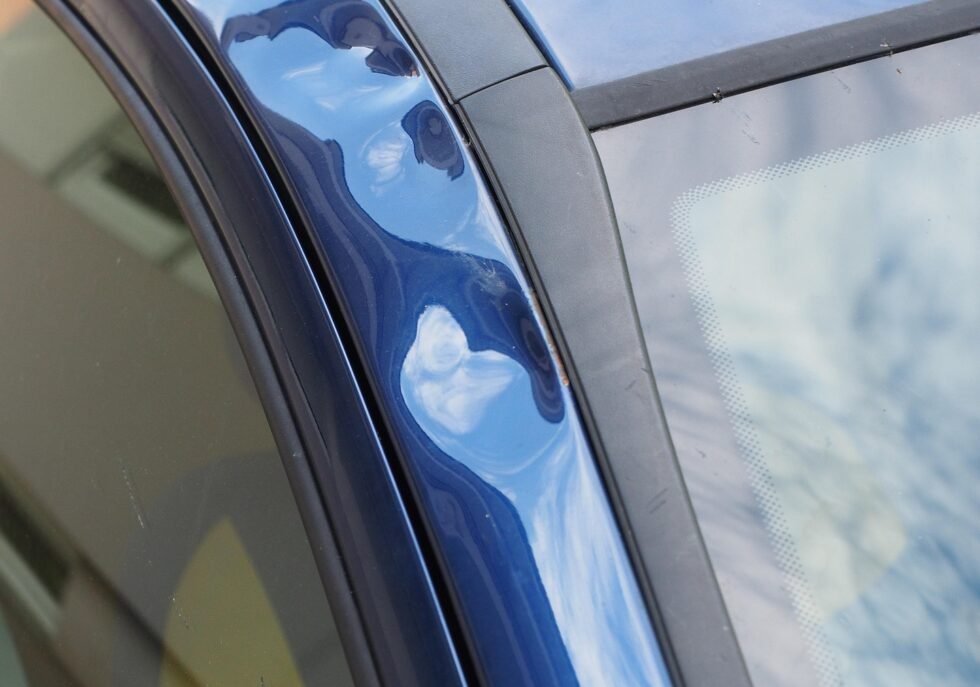
The sound of hail hitting your roof is unmistakable, a chaotic, deafening drumming that signals instant depreciation. You stand at the window, helpless, listening to thousands of dollars of damage accumulate in seconds. When the skies finally clear over Oklahoma City, the silence that follows is heavy. You walk outside to inspect your vehicle, hoping the impacts were small, but the hood looks like the surface of a golf ball.
You likely have immediate questions: Is this totaled? Can it be fixed without repainting? Will insurance actually cover this? The path from a dimpled hood to a restored vehicle isn’t based on luck. It is a rigid, mathematical process defined by lighting physics, material science, and specific insurance mandates. Here is exactly how that process works.
Key Notes
- Wait for the storm to fully pass and avoid power lines before checking the vehicle.
- Take 50 to 100 photos using a coin for scale to support your insurance claim.
- Professional assessment requires specialized PDR lights or reflection boards, sunlight hides damage.
- Repair costs are calculated using a standardized pricing matrix based on dent count and size.
- If repairs plus salvage value exceed the car’s Actual Cash Value (ACV), the insurer will total the vehicle.
Immediate Action Steps for OKC Drivers Following a Severe Hailstorm
Vehicle safety is the absolute first priority. Do not rush outside while ice is still falling. Once the storm has fully passed and you have confirmed there are no downed power lines or dangerous debris, move the car to a safe, covered location. This prevents secondary water damage, which is a common reason for partial claim denials.
How to Document the Damage
Documentation is the most vital step for a successful insurance claim at Syed Brothers Auto Body Shop OKC. Insurance adjusters process thousands of claims after a major storm, clear evidence sets your file apart.
- Photo Volume: Insurance experts recommend capturing 50 to 100 high-resolution photos. Do not rely on three or four snapshots.
- Angles: Take wide shots of the entire car to establish context, then move to close-ups of every body panel including the hood, roof, trunk, and sides.
- Scale: Place a coin, such as a quarter or dime, next to a dent. This provides the adjuster with an immediate, undeniable size reference.
- Video: Record a timestamped walk-around video. Narrate the location and date to create a timeline of the event.
Initiating Your Comprehensive Insurance Claim and Preventing Secondary Loss
Hail damage falls under comprehensive insurance, which is distinct from collision coverage. This acts as a safeguard for “acts of God” or events outside your control. According to the Insurance Information Institute (III), hail claims are among the most frequent comprehensive claims filed in the United States. You must contact your provider immediately to meet policy notification requirements.
Preventing Further Damage
Mitigating loss is a policyholder’s responsibility. If your glass is broken or the sunroof is shattered, you must cover the openings with waterproof tarps immediately. Allowing rain to soak the interior because of a broken window can lead to claim denials based on negligence.
In 2023, the average vehicle hail damage claim ranged between 4,000 and 5,000 dollars, with severe cases exceeding 10,000 dollars. Initiating the claim early ensures you get into the repair queue before local shops are overwhelmed.
The Professional Hail Inspection Process Inside a Controlled Environment
A driveway inspection is never accurate. Sunlight creates glare that washes out shallow dents, making a vehicle look far better than it actually is. A proper assessment requires a systematic approach performed by a specialist at a local shop like Syed Brothers Auto Body Shop OKC or an insurance adjuster.
The vehicle must be moved indoors to a controlled environment. Standard overhead shop lighting is also insufficient. Professionals use specialized high-contrast lighting to reveal surface irregularities.
The Inspection Workflow
The assessor evaluates every panel systematically:
- Horizontal Panels: Roof, hood, and trunk usually sustain the heaviest impact.
- Vertical Panels: Doors, fenders, and quarter panels are checked for side impacts or wind-blown hail.
- Trim and Glass: Moldings, plastic trim, and glass are inspected for cracks, chips, or stress marks.
A standard inspection usually takes 30 to 60 minutes, depending on the severity of the storm.

Quantifying Damage Through Detailed Dent Counting and Categorization
Accuracy in the estimate depends on the dent count per panel. Assessors do not guess, they count every individual dent and categorize them by size to build the repair quote.
Dent Sizing Categories
- Dime: Smallest detectable dents.
- Nickel: Moderate impact.
- Quarter: Significant impact.
- Half-Dollar: Severe impact, often requiring complex repair techniques.
Software and Supplemental Claims
Professionals use industry software like Audatex or CCC ONE to generate estimates. This software contains databases for vehicle parts and standard labor times.
It is common for the initial insurance estimate to be lower than the final cost. Adjusters often miss damage visible only under shop lights or after trim removal. In these cases, collision repair experts at Syed Brothers identify the hidden damage during the teardown. A supplemental claim is then filed with the insurer to cover these additional costs. This is a standard part of the process and ensures the repair is complete.
Specialized Technology for Detecting Hidden Surface Distortions
Professional assessors use visual enhancement tools that detect distortions the naked eye misses. The Paintless Dent Repair (PDR) Light is the industry gold standard.
The PDR Light
This tool uses a board with parallel lines or a reflective fog pattern. When reflected off the car’s paint, the lines should appear straight. If there is a dent, the lines distort or curve around the impact point. This makes even the shallowest indentation clearly visible.
Digital Scanning and AI
Advanced assessment involves digital damage scanners and AI-powered apps. These devices create 3D maps of the vehicle surface. AI algorithms detect and measure the depth and diameter of each dent with extreme precision. This provides an objective, repeatable report that reduces human error and disagreements between the shop and the insurance company.
How the Hail Damage Matrix Determines Your Final Repair Costs
The PDR pricing matrix is the standardized guide used by shops and insurers to maintain transparency. The formula combines the number of dents per panel with the average size of those dents to reach a base labor price.
Pricing Matrix Structure
The matrix works like a grid. One axis lists the dent count (e.g., 1–5, 6–15, 16–30), and the other lists the dent size. A panel with 20 quarter-sized dents will have a specific, non-negotiable labor code.
Common Upcharge Factors
Base prices increase based on complexity.
- Aluminum Panels: Found on many newer vehicle hoods (like the Ford F-150) and trunks. Aluminum has no metal memory and is difficult to work with, often incurring a 25 to 50 percent price upcharge.
- Oversized Dents: Dents larger than a half-dollar fall outside standard matrix pricing and are negotiated individually.
- Glue Pulling: Required for rails or areas with no rear access.
- R and I (Remove and Install): Labor costs for removing headliners, taillights, or interior trim to access the back of the metal.
Handling the Total Loss Formula and Actual Cash Value (ACV)
If repair costs are too high relative to the car’s value, the insurance company will declare it a total loss. This is an economic decision, not necessarily a reflection of the car’s drivability.
The Total Loss Formula
A car is considered totaled when:
Repair Cost + Salvage Value ≥ Actual Cash Value (ACV)
The ACV is the market value of the car just before the storm, determined by mileage, condition, and local sales data. It is not the same as the replacement cost or what you owe on your loan.
State Thresholds
Most states operate under a Total Loss Threshold (TLT). In Oklahoma and surrounding regions, this threshold is often around 75 to 100 percent of the ACV.
Metric | Example Value |
Vehicle ACV | $12,000 |
State Threshold (75%) | $9,000 |
Repair Estimate | $9,200 |
Result | Total Loss |
If your repair estimate hits that $9,000 mark in this scenario, the insurer is legally obligated to total the vehicle.
Comparing Paintless Dent Repair (PDR) vs. Conventional Body Methods
The assessment dictates the repair path. For 90 percent of hail cases where the paint remains intact, Paintless Dent Repair (PDR) is the preferred method.
Skilled technicians at Syed Brothers Auto Body Shop OKC use specialized rods and picks to massage the metal back to its original shape from behind the panel.
- Pros: Preserves original factory paint, faster turnaround (1 to 3 days), and environmentally friendly.
- Cons: Cannot fix cracked paint or metal that is stretched beyond its elastic limit.
Conventional Repair
This involves sanding down the paint, filling the dent with body filler (Bondo), and repainting the panel.
- When Used: If the paint is cracked, the metal is severely stretched, or the panel is punctured.
- Drawbacks: More expensive, takes weeks, and replaces the factory finish with aftermarket paint, which can lower resale value.
Hail damage assessment is a precise science that bridges the gap between a chaotic storm and a restored vehicle. Understanding this process empowers you to advocate for the quality repair your car deserves. When the ice settles and the clouds clear, you need a partner who understands both the technical intricacies of PDR and the complexities of insurance claims.
For Oklahoma City drivers, Syed Brothers Auto Body Shop OKC offers the expertise required to handle this process smoothly. From the initial high-contrast inspection to the final quality check, we ensure your vehicle is returned to its pre-storm condition with its factory finish intact. Don’t let a storm permanently devalue your investment, trust Syed Brothers to handle your hail damage repair with precision and care.
Frequently Asked Questions
What Is The First Thing I Should Do If My Car Is Caught In A Hailstorm?
Your absolute priority is personal safety, not vehicle preservation.
Pull over to a covered area like a gas station canopy or parking garage if safe. Do not try to outrun the storm, as driving at speed increases the impact force of the hail, significantly worsening the damage.
Stay inside the vehicle away from glass. Hailstorms in OKC are often accompanied by lightning and high winds. Exposing yourself to check for dents during the storm is dangerous.
Only inspect the vehicle once the storm has fully passed. According to State Farm and Geico, moving the vehicle to a dry, covered location immediately after the storm is critical to prevent water damage to the interior if windows are compromised.
How Many Photos Do I Need To Take For A Hail Damage Insurance Claim?
A comprehensive claim requires volume and detail to prevent disputes.
Take significantly more photos than you think you need. Cover every angle. Insurance adjusters are remote, your photos are their eyes.
Place a quarter or dime next to dents in your close-up shots. This provides an indisputable size reference for the adjuster, preventing them from downgrading a "quarter-sized" dent to a "dime-sized" dent.
Start with the license plate and VIN, then move to the four corners of the car, and finally zoom in on specific panels. Allstate recommends documenting the vehicle while it is dry, as water droplets can obscure small dents.
Does A Hail Damage Claim Make My Insurance Premiums Go Up?
Generally, hail claims have a different impact on rates than collision claims.
Hail is classified as a comprehensive claim (an "act of God"), not a collision claim. In many states, insurers cannot legally raise your rates individually for a comprehensive claim since it was not your fault.
While your individual rate might not spike, if an entire zip code in OKC files claims simultaneously, the base rate for that area may increase upon renewal to reflect the higher risk profile.
Frequent claims of any type can affect your insurability. However, The Insurance Information Institute notes that comprehensive claims are generally viewed less negatively than at-fault accidents.
What Is The Difference Between A Field Adjuster And A Body Shop Estimate?
Discrepancies between these two estimates are standard and expected.
The field adjuster writes a preliminary visual estimate, often outdoors. They write what they can see. The body shop writes a final blueprint, often after disassembling parts and using PDR lights indoors.
When Syed Brothers Auto Body Shop finds damage the adjuster missed (which happens in almost every hail claim), they file a "supplement." This is a request for additional funds to cover the documented hidden damage.
Both parties usually use the same software (like CCC ONE or Audatex). The difference is usually in the "severity" input, the shop sees more dents under shop lights than the adjuster saw in a driveway.
How Does An Aluminum Hood Affect The Cost Of Hail Repair?
Aluminum panels significantly increase the cost of repair due to material properties.
Aluminum does not have "metal memory" like steel. It does not want to return to its original shape and requires more force and heat to manipulate.
Repairing aluminum often incurs a 25% to 50% labor upcharge on the PDR matrix. This is a standard industry practice recognized by insurers.
Many modern vehicles, such as the Ford F-150 and various luxury cars, use aluminum to save weight. You can test this with a magnet, if it doesn't stick to the hood, it is aluminum or composite.
What Is A Paintless Dent Repair (PDR) Light And Why Is It Used?
The PDR light is a diagnostic tool, not just a source of illumination.
These lights project parallel lines or a fog gradient onto the paint. Technicians do not look at the dent directly, they look at the reflection of the lines.
Where the metal is bent, the reflected lines will curve or pinch together. This allows the technician to see the exact center (the "low") of the dent and the surrounding pressure ridge (the "high").
Without a PDR light, it is impossible to verify if a dent is 100% removed. Sunlight or fluorescent shop lights wash out the fine detail, leaving "orange peel" textures behind.
What Happens If The Body Shop Finds More Damage Than The Insurance Adjuster?
This is a routine part of the collision repair workflow called a "supplement."
If significantly more damage is found (e.g., a cracked support beam under a fender), the shop pauses work on that area.
The shop takes photos and measurements of the newly discovered damage and submits a supplemental request to the insurance company.
The insurer reviews the evidence and approves the additional funds. According to I-CAR standards, a thorough teardown is often required to find all damage, meaning the initial insurance estimate is rarely the final price.
How Is The Actual Cash Value (ACV) Of My Car Calculated?
ACV is a market-based valuation, not a reflection of what you paid for the car.
ACV is essentially the replacement cost minus depreciation. It represents what your specific vehicle would sell for on the local market moments before the storm hit.
Insurers use third-party vendors (like CCC Information Services) to analyze comparable vehicles for sale in your area, adjusting for your specific mileage, trim level, and pre-loss condition.
You can dispute an ACV offer if you can prove (with dealer listings) that comparable cars in OKC are selling for more than the offer. J.D. Power provides consumer-facing valuation tools that can serve as a baseline for these discussions.
What Is A Total Loss Threshold And What Is The Percentage In My State?
The Total Loss Threshold (TLT) dictates when a car must be scrapped.
It is the ratio of repair costs to the vehicle's Actual Cash Value. If repairs cost $8,000 and the car is worth $10,000, the ratio is 80%.
Oklahoma uses a Total Loss Threshold, where if the repair cost reaches approximately 60% to 75% of the ACV (depending on the specific carrier and strict application of statutory versus formulaic rules), the car is totaled.
Even if a car is drivable, if the math exceeds the threshold, the insurer is financially better off paying you the ACV and selling the wreck for salvage.
Is Paintless Dent Repair A Permanent Fix For Hail Dents?
Yes, PDR is considered a permanent, lifetime repair.
PDR physically moves the metal back to its original factory stamping. It does not fill the hole, it removes the dent.
Unlike body filler (Bondo), which can shrink, crack, or pop out over years of thermal cycling, metal that has been correctly massaged back to shape remains stable.
Because the original paint is never disturbed, there is no risk of clear coat peeling or color mismatching down the road. Car and Driver cites PDR as the best method for maintaining vehicle value.
Can I Keep My Car If The Insurance Company Declares It A Total Loss?
Yes, this is called "owner retention," but it comes with caveats.
The insurance company will pay you the Actual Cash Value minus the salvage value (what they would have sold the wreck for). You get a smaller check, but you keep the car.
You will likely have to apply for a "salvage title." Once repaired, it must pass a state inspection to get a "rebuilt title."
Vehicles with salvage or rebuilt titles are often difficult to insure for comprehensive or collision coverage in the future.
What Does R And I Stand For On A Car Repair Estimate?
"R and I" stands for Remove and Install.
To push a dent out of a roof, the technician needs access to the underside of the metal. This requires removing the headliner (the fabric ceiling).
You are paying for the labor to carefully take the part off, store it, and reinstall it after the repair.
Do not confuse R&I with R&R (Remove and Replace). R&I means the original part goes back on, R&R means a new part is purchased.
Why Is Factory Paint Better Than Aftermarket Repainting After Hail?
Factory paint is applied under conditions that cannot be replicated in a body shop.
Factory paint is baked at extremely high temperatures (over 300°F) before the interior or rubber seals are installed. This creates a superior molecular bond.
The robotic application ensures even thickness and consistency that is difficult for humans to match perfectly.
A repainted panel is easily detectable with a paint depth gauge. Keeping the original paint via PDR maintains the "all-original" status of the vehicle, which commands a higher trade-in value.
How Long Does A Professional Hail Damage Assessment Usually Take?
The assessment is distinct from the repair and is relatively quick.
A thorough hail estimate typically takes 30 to 60 minutes per vehicle.
A car with 50 dents takes less time to count than a car with 500 dents. Heavy damage requiring panel removal for access adds time.
Assessments take longer if the car is dirty. The shop must wash and dry the vehicle first to ensure accurate dent counting.
Will A Hail Claim Show Up On A CARFAX Report?
Yes, insurance claims and shop repairs are routinely reported to vehicle history databases.
It will likely appear as "Damage Report" or "Hail Damage Repair." It usually does not show up as an "Accident."
While any damage report can affect value, a documented PDR repair is viewed much more favorably than a collision repair involving structural work and repainting.
When selling the car, having the receipt from Syed Brothers showing professional PDR repair helps explain the Carfax entry and reassures buyers that the vehicle was fixed correctly.