
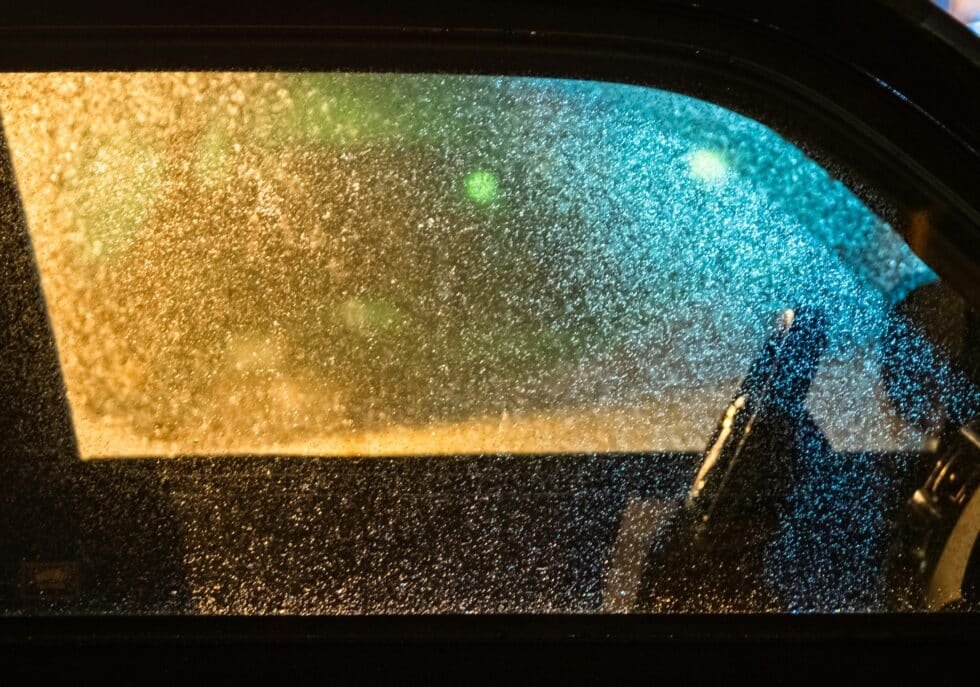
Driving west on I-40 during the golden hour shouldn’t feel like you are piloting a spaceship through an asteroid field. Yet, for many drivers in Oklahoma, that blinding glare caused by hundreds of tiny, crusty white dots on the windshield turns a beautiful sunset into a white-knuckle safety hazard. These aren’t just cosmetic annoyances, they are mineral deposits that scatter light, ruin wiper blades, and create dangerous blind spots. You might think a quick pass through a generic car wash will fix it, but you often roll out with the same spots, now baked even harder into the glass by the relentless Oklahoma heat.
This guide strips away the confusion around auto glass care, explaining exactly what those spots are and providing proven methods, from kitchen chemistry to industrial restoration, to make your windshield invisible again.
Important Notes
- Most tap water contains high levels of calcium and magnesium that solidify on your glass the moment water evaporates.
- Mild acids like vinegar and lemon juice dissolve fresh alkaline mineral deposits effectively.
- Type I spots are surface-level, Type III spots are actual craters etched into the glass requiring professional repair.
- Professional gels use acid to neutralize bonds, while abrasive polishes physically shear the minerals off.
- Hydrophobic ceramic coatings create a high contact angle, forcing water to bead up and roll off before deposits can form.
- For deep etching or “cratered” glass, Syed Brothers Auto Body Shop OKC provides rotary polishing and windshield replacement.
Why Your Auto Glass Has White Spots and Mineral Deposits
Water spots are essentially the fossilized remains of tap water. When the liquid evaporates, the solids dissolved inside it have nowhere to go, so they latch onto your windshield. The U.S. Geological Survey (USGS) reports that over 85 percent of American homes have hard water. This water is packed with dissolved minerals like calcium carbonate, magnesium, and sodium. In Oklahoma City, where surface temperatures on a car can easily fry an egg, this mineral-rich water evaporates almost instantly, soldering the deposits to the glass before you can grab a drying towel.
Identifying the specific type of spot you have dictates your attack plan. Industry experts break these down into three categories:
- Type I Hard Water Spots: These are fresh deposits sitting on top of the glass or clear coat. You can feel their crusty texture with your fingernail. They are generally simple to remove with basic cleaners.
- Type II Bonded Mineral Spots: These occur when minerals stay on the surface long enough to form a chemical bond with the silica in the glass. They require specific chemical neutralizers or fine abrasives to remove.
- Type III Etched Water Spots: This is permanent damage. Corrosive agents, such as acid rain or bird droppings, have eaten into the glass surface, leaving microscopic valleys or craters. You cannot “clean” these, you must level the surrounding glass down to the bottom of the crater. This often requires heavy correction by professionals like Syed Brothers Auto Body Shop OKC.
Eliminating Light Mineral Deposits with Household Solutions and Natural Acids
You don’t always need to rush to the auto parts store for minor spotting. Basic chemistry principles apply here: acids neutralize alkalis. Since hard water deposits are alkaline (high pH), introducing a mild acid can dissolve the bond holding the mineral to the windshield.
Using a Distilled Vinegar Solution
White vinegar is a staple because it contains acetic acid, typically at 5 to 8 percent concentration. This is aggressive enough to dissolve calcium but safe for glass surfaces.
Supplies Needed:
- Distilled white vinegar
- Distilled water
- Spray bottle
- High-GSM microfiber towels
The Process:
- Preparation: Park your vehicle in the shade. The glass must be cool. If you spray vinegar on hot glass, it will dry instantly and leave its own residue.
- Mixing: Mix vinegar and distilled water in a 50/50 ratio in your spray bottle. You must use distilled water, using tap water defeats the purpose by adding more minerals.
- Application: Saturate the glass with the solution. Let it sit for one to three minutes. This “dwell time” is crucial for the acid to break down the minerals.
- Agitation: Wipe the area firmly with a clean microfiber towel.
- Rinse and Dry: Rinse thoroughly with distilled water or wash with pH-neutral soap, then dry immediately.
Using Lemon Juice for Alkaline Deposits
Lemon juice relies on citric acid to attack alkaline buildup. It is often slightly more potent than vinegar, making it a good backup for stubborn spots, though it requires more cleanup due to natural sugars.
Apply fresh lemon juice to a cloth and scrub the glass. Let it sit for about a minute. You must rinse this exceptionally well. If lemon juice dries on your windshield in the OKC sun, the sugars will caramelize, creating a sticky haze that attracts road dust and grime.

Professional Grade Water Spot Removers for Heavy Mineral Buildup
If vinegar doesn’t make a dent, the minerals have likely bonded chemically to the surface (Type II). At this point, you need engineered products designed to sever these bonds or physically grind the minerals away.
Chemical Gels vs. Abrasive Polishes
Commercial solutions are usually split into two camps: acidic gels and abrasive compounds.
Chemical Removers: Products like Chemical Guys Hard Water Spot Remover or 3D Eraser Gel use concentrated acids to chemically destroy the mineral structure. Manufacturers formulate these as thick gels so they stick to vertical windows without dripping onto your paint.
Abrasive Polishes: These work through friction. They contain micro-abrasives, often cerium oxide, to physically cut the mineral deposit off the glass. Options like Meguiar’s A3714 Compound or Griot’s Garage Fine Glass Polish work best when applied with a dual-action polisher.
Comparison of Removal Methods
|
Feature |
Chemical Removers |
Abrasive Polishes |
|
Mechanism |
Chemical neutralization (Acid-based) |
Physical friction (Micro-abrasives) |
|
Best For |
Heavy Type I and Type II spots |
Bonded Type II and surface scratches |
|
Application |
Wipe on, dwell, rinse off |
Buff on (hand or machine), wipe off |
|
Risk Factor |
Can damage paint if left too long |
Can distort glass if overworked |
Safety Warning: Most chemical removers are highly acidic. Never use them on aftermarket window tint, as the acid will destroy the film. Always protect your paint, as acidic runoff can strip wax or etch your clear coat.
Why Professional Glass Polishing and Restoration is Necessary
If you have scrubbed with vinegar, applied chemical gels, and the outline of the spot is still visible, you are dealing with Type III etching. This isn’t a stain on the glass, it is a hole in the glass.
This damage often stems from acid rain. The American Chemical Society explains that nitrogen and sulfur oxides in the air react with moisture to form nitric and sulfuric acids. When this acidic water hits your windshield and evaporates, the acid concentration spikes, eating into the silica structure. You cannot scrub a hole away. Restoration involves leveling the glass surface until it meets the bottom of the crater.
Shops like Syed Brothers Auto Body Shop OKC use high-speed rotary polishers and industrial cerium oxide slurry for this. This process shaves off a microscopic layer of glass to restore perfect clarity. This is high-risk work, inexperienced polishing can create “lensing,” where the glass becomes uneven and distorts your vision like a funhouse mirror. For severe etching that weakens the windshield, total replacement is the safer, smarter choice.
Proactive Steps to Prevent Hard Water Stains on Your Car Glass
Stopping spots before they form saves you hours of labor. The golden rule: never let tap water air-dry on your car. If you wash it, dry it. If a sprinkler hits it, rinse and dry it immediately.
Modern nanotechnology provides a shield in the form of ceramic glass coatings. Products like CarPro FlyBy Forte or Gtechniq G1 chemically bond to the glass pores. Gtechniq technical data indicates these coatings create a water contact angle exceeding 110 degrees.
This contact angle forces water to bead up tightly and roll off the glass before evaporation occurs, taking the minerals with it. While not a forcefield, these coatings ensure that if a spot does dry, it sits on the coating rather than the glass, making removal as easy as a quick wipe.
Water Filtration Systems
For the dedicated car owner in OKC, a de-ionizing (DI) water system is the ultimate solution. Units like the CR Spotless Water System use resin beads to filter out Total Dissolved Solids (TDS). This yields water that is 100% mineral-free. You can wash your car in blazing sunlight and let it air dry without a single spot appearing, simply because there are no minerals in the water to leave a deposit.
Optical clarity is non-negotiable for safe driving. Whether you are fighting fresh calcium deposits or deep chemical etching, taking action now prevents permanent damage later. For surface issues, pantry staples or commercial gels usually do the job. However, when the glass is physically damaged or visibility is compromised, professional restoration is the only responsible option. Syed Brothers Auto Body Shop OKC delivers precision glass restoration, collision repair, and paint services to ensure your vehicle looks showroom-ready and your view of the road remains crystal clear.
Frequently Asked Questions
Why Do I Get Spots On My Car Windows After Washing Them At Home?
The primary culprit is the mineral content in your water supply. Data from the U.S. Geological Survey indicates that the majority of American households access hard water, which carries high loads of dissolved calcium and magnesium. When you wash your car, you cover it in these minerals. As the water evaporates, a process accelerated by the Oklahoma heat, the liquid turns to gas, but the heavier solids remain.
These minerals calcify instantly on the hot glass. To prevent this, you must interrupt the evaporation process by drying the vehicle immediately with forced air or a microfiber towel, or by using a de-ionizing filter that removes the minerals at the source.
Is Vinegar Safe To Use On My Car's Paint While Cleaning Glass?
Vinegar is effective on glass but requires caution around paint. It contains acetic acid, which can strip away protective waxes and sealants that preserve your clear coat. While a momentary splash usually won't cause immediate failure, allowing vinegar to dry on painted surfaces, especially in direct sunlight, can lead to acid etching, which looks similar to the damage caused by bird droppings.
When treating your windshield, control your spray pattern to avoid overspray. If vinegar does land on the hood or roof, rinse it immediately with water to neutralize the pH levels.
Can I Use Steel Wool To Scrub Water Spots Off My Windshield?
You can use steel wool, but the grade is non-negotiable, it must be Grade #0000 (Super Fine). Any grade coarser than this, such as those found under the kitchen sink, will scratch the glass, causing permanent haze and dangerous glare at night.
Furthermore, you must never use steel wool dry. Always use a lubricant, such as a dedicated glass cleaner or a soapy water solution, to reduce friction. Note that this method is strictly for exterior windshield glass, never use steel wool on side mirrors (which are often plastic) or aftermarket tint, as it will destroy them.
Are Water Spots Permanent If They Are Not Cleaned Immediately?
Water spots follow a timeline of damage. They begin as Type I surface deposits, which are easily removed. However, if left untreated, the heat cycles common in OKC cause the minerals to bond chemically with the glass, becoming Type II spots.
Eventually, if the deposit is acidic (like acid rain) or highly alkaline, it will etch into the glass, creating Type III damage. This is a physical crater in the glass structure. Once this etching occurs, the damage is permanent in the sense that you cannot "clean" it off, the glass must be polished down to the bottom of the crater to restore clarity.
What Is The Difference Between Hard Water Spots And Acid Rain Etching?
The difference lies in whether material is being added to or removed from the glass. Hard water spots are additive, they are mineral piles (calcium/magnesium) built up on the surface. Acid rain etching is subtractive, it is the result of atmospheric acids (sulfuric/nitric) eating away the glass.
Visually, hard water spots look white and crusty and feel rough to the touch. Acid rain etching appears as clear, shallow depressions or "divots" that refract light and cause glare. While you can dissolve mineral spots with acid, you must mechanically polish the glass to fix acid rain etching, a service provided by Syed Brothers Auto Body Shop OKC.
Do Car Waxes Prevent Water Spots From Forming On Glass?
Car waxes provide a useful, albeit temporary, layer of protection. They create a hydrophobic barrier that causes water to bead and roll off, reducing the volume of mineral-laden water left to evaporate.
More importantly, the wax acts as a sacrificial layer. If a mineral deposit does form, it is likely etching into the wax rather than the glass itself, making removal significantly easier during your next wash. However, standard car waxes often streak under wiper use, dedicated glass coatings like Gtechniq G1 are formulated to withstand the friction of wiper blades better than paint wax.
Is A Water Filter For My Garden Hose Worth The Cost For Car Washing?
Standard sediment filters are ineffective against water spots because they do not remove dissolved minerals. You need a de-ionizing (DI) system that targets Total Dissolved Solids (TDS).
For car owners in regions with hard water like OKC, or those with dark-colored vehicles where spots are highly visible, a DI system is a wise investment. It eliminates the rush to dry the car. With a high-quality system like CR Spotless, the water dries without leaving residue, preventing the swirl marks that often result from towel drying.
Can I Use A Regular Household Glass Cleaner Like Windex For Mineral deposits?
Standard household cleaners are typically ammonia-based, which makes them excellent for cutting grease but useless against mineral deposits. To remove minerals, you need an acidic cleaner, ammonia is alkaline. Using an alkaline cleaner on an alkaline mineral deposit will not break the bond.
Additionally, you must avoid ammonia-based cleaners on tinted windows, as they cause the film to bubble and peel. Standard glass cleaners are best used as a final step to remove residue after the minerals have been dissolved by a specialized remover.
Are Water Spot Removers Safe For Aftermarket Window Tints?
Water spot removers are formulated for the exterior surface of the glass. Aftermarket tint is applied to the interior. Consequently, you should rarely need strong chemicals on the inside. If you do have spots on the tint film, do NOT use acid-based removers or abrasives, as they will degrade the polyester material. Use a damp microfiber cloth or a tint-safe cleaner.
When working on the exterior, ensure chemicals do not drip down the window seals where they could seep into the door panel and contact the edge of the tint film.
How Often Should I Apply A Hydrophobic Glass Sealant In Oklahoma Weather?
The longevity of a glass sealant depends heavily on environmental exposure. Oklahoma's intense UV radiation, dust, and variable precipitation degrade coatings faster than milder climates. A standard spray-on rain repellent may last only 2-4 weeks.
A true ceramic glass coating, such as CarPro FlyBy Forte, can last 6 to 12 months. You should reapply the sealant when you notice the water begins to "sheet" slowly rather than beading up tightly and flying off the windshield at driving speeds.
Does Syed Brothers Auto Body Shop OKC Offer Professional Glass Polishing Services?
Yes, Syed Brothers Auto Body Shop OKC specializes in advanced glass restoration. Their technicians handle the severe Type III etching that DIY methods cannot fix. They utilize professional rotary polishers and industrial compounds, such as cerium oxide, to level the glass surface without introducing optical distortion. They can also assess the depth of the damage to determine if polishing is viable or if a full windshield replacement is required for safety.
Why Does The Sun Make Water Spots Harder To Remove?
The sun exacerbates water spotting through two mechanisms. First, heat accelerates evaporation, causing minerals to precipitate out of the water instantly rather than running off. Second, glass is porous on a microscopic level.
Heat causes these pores to expand, allowing the minerals to settle deeper into the surface structure. This "baking" effect hardens the deposit and accelerates the chemical bonding process, turning what should be a simple wipe-down into a complex restoration job.